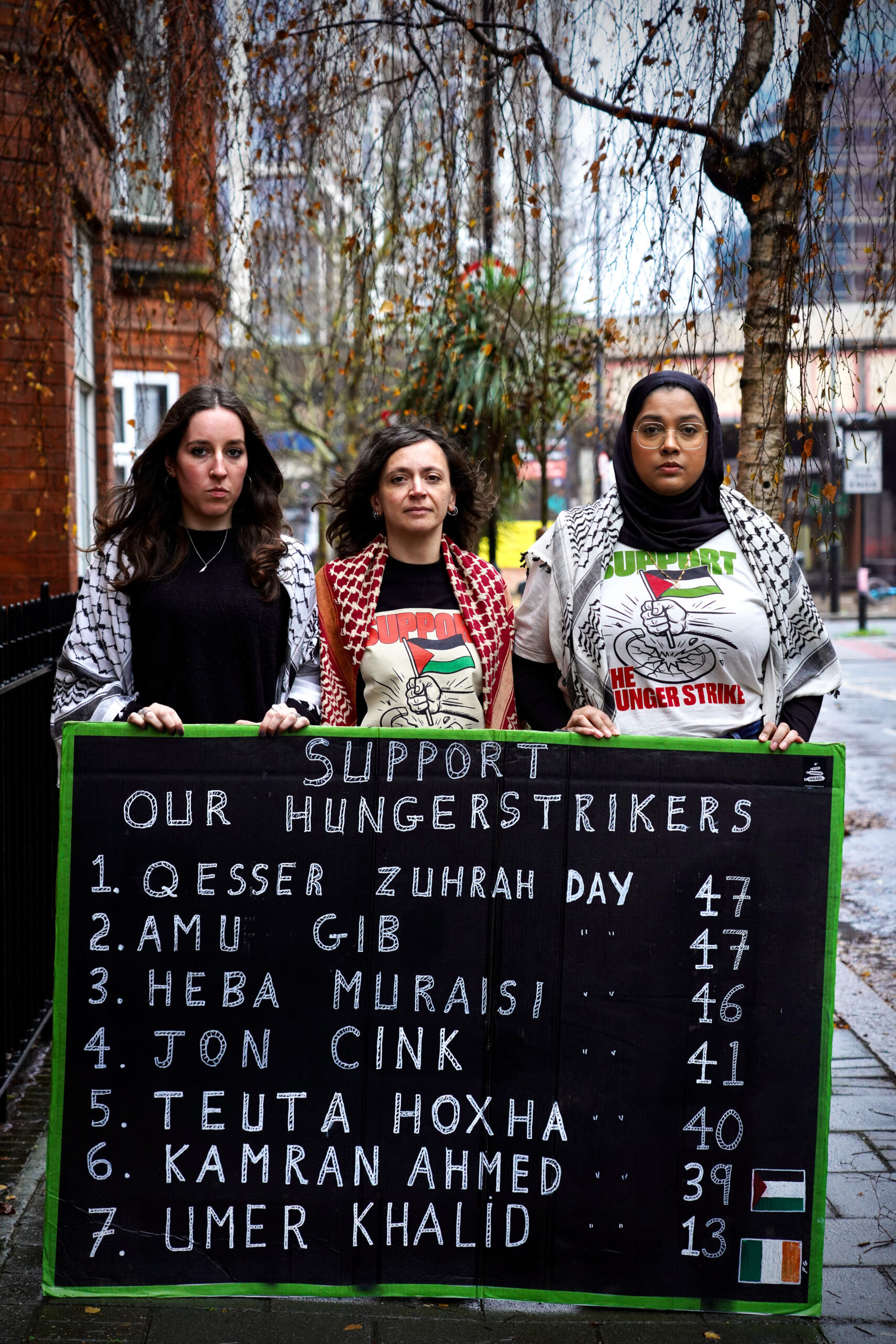
GENEVA – UN experts* today expressed grave concern for the lives and fundamental rights of eight pro-Palestinian activists imprisoned in the United Kingdom, who have been on indefinite hunger strike since 2 November.
“Hunger strike is often a measure of last resort by people who believe that their rights to protest and effective remedy have been exhausted,” the experts said.
As they enter the second month of their strike, the health of the pro-Palestinian detainees has reportedly deteriorated significantly, placing them at critical risk of serious complications, including organ failure, irreversible neurological damage, cardiac arrhythmias and death.
“The State’s duty of care toward hunger strikers is heightened, not diminished,” the experts said. “Authorities must ensure timely access to emergency and hospital care when clinically indicated, refrain from actions that may amount to pressure or retaliation, and respect medical ethics.”
The expert recalled that respect for the right to health is applicable to everyone, including persons deprived of their liberty. They stressed that States must respect individual autonomy, ensure continuous, independent medical monitoring, provide accurate information about health risks, and take all necessary steps to protect life and prevent irreversible harm, without resorting to coercive or punitive measures.
They also expressed concerns regarding the treatment of the hunger strikers, including reported delays in accessing medical care, use of excessive restraint during hospital treatment, denial of contact with family members and legal counsel, and lack of consistent independent medical oversight, particularly for detainees with serious pre-existing health conditions.
“These reports raise serious questions about compliance with international human rights law and standards, including obligations to protect life and prevent cruel, inhuman or degrading treatment,” the experts said.
They have previously raised concerns with the UK Government regarding the application of counter-terrorism and security frameworks to acts of political protest that are not genuinely terrorist according to international standards, and warned against the criminalisation of conduct that falls within the protected exercise of the rights to freedom of assembly, association, and expression, and the suppression of legitimate political dissent, including advocacy related to Palestine.
The experts have also expressed serious concern as to the overbreadth of the definition of terrorism under UK law, the proscription of Palestine Action under the Terrorism Act 2000, and the subsequent mass arrests and criminal charges, including terrorism-related offenses, brought against individuals for alleged support for Palestine Action.
“These hunger strikes must be understood within the broader context of restrictions on pro-Palestinian activism in the UK,” the experts said, noting that the detainees are held in connection with protest-related activity.
They urged the United Kingdom to immediately guarantee appropriate healthcare for all hunger strikers, and engage in meaningful dialogue and action to address not only the claims of the protestors, but also underlying rights violations, and an end to the repression of Palestine activism.
“Preventable deaths in custody are never acceptable. The State bears full responsibility for the lives and wellbeing of those it detains,” the experts said. “Urgent action is required now.”
The experts stand ready to engage constructively with the UK Government and will continue to monitor the situation closely.
*The experts:
- Gina Romero, the Special Rapporteur on the rights to freedom of peaceful assembly and of association
- Tlaleng Mofokeng, the Special Rapporteur on the right of everyone to the enjoyment of the highest attainable standard of physical and mental health
- Cecilia M. Bailliet, the Independent Expert on human rights and international solidarity
- George Katrougalos, the Independent expert on the promotion of a democratic and equitable international order
- Ben Saul, the Special Rapporteur on the promotion and protection of human rights and fundamental freedoms while countering terrorism
- Irene Khan, the Special Rapporteur on the promotion and protection of the right to freedom of opinion and expression
- Francesca Albanese, the Special Rapporteur on the situation of human rights in the Palestinian territory occupied since 1967