22-year-old Umer Khalid ended his strike during which he met with the prison governor of HMP Wormwood Scrubs, Amy Frost, in order to discuss his prison conditions. As a result of the meeting, Umer recieved his previously withheld mail and clothes, and his restrictions on visits, which have been heavily limited ever since being held on remand in July 2025, were also lifted.
His 17-day hunger strike and 3-day thirst strike ended after being rushed to the intensive care unit in hospital, suffering multiple organ failure. Umer’s family were not alerted that he was admitted to the hospital or given access to his medical reports.
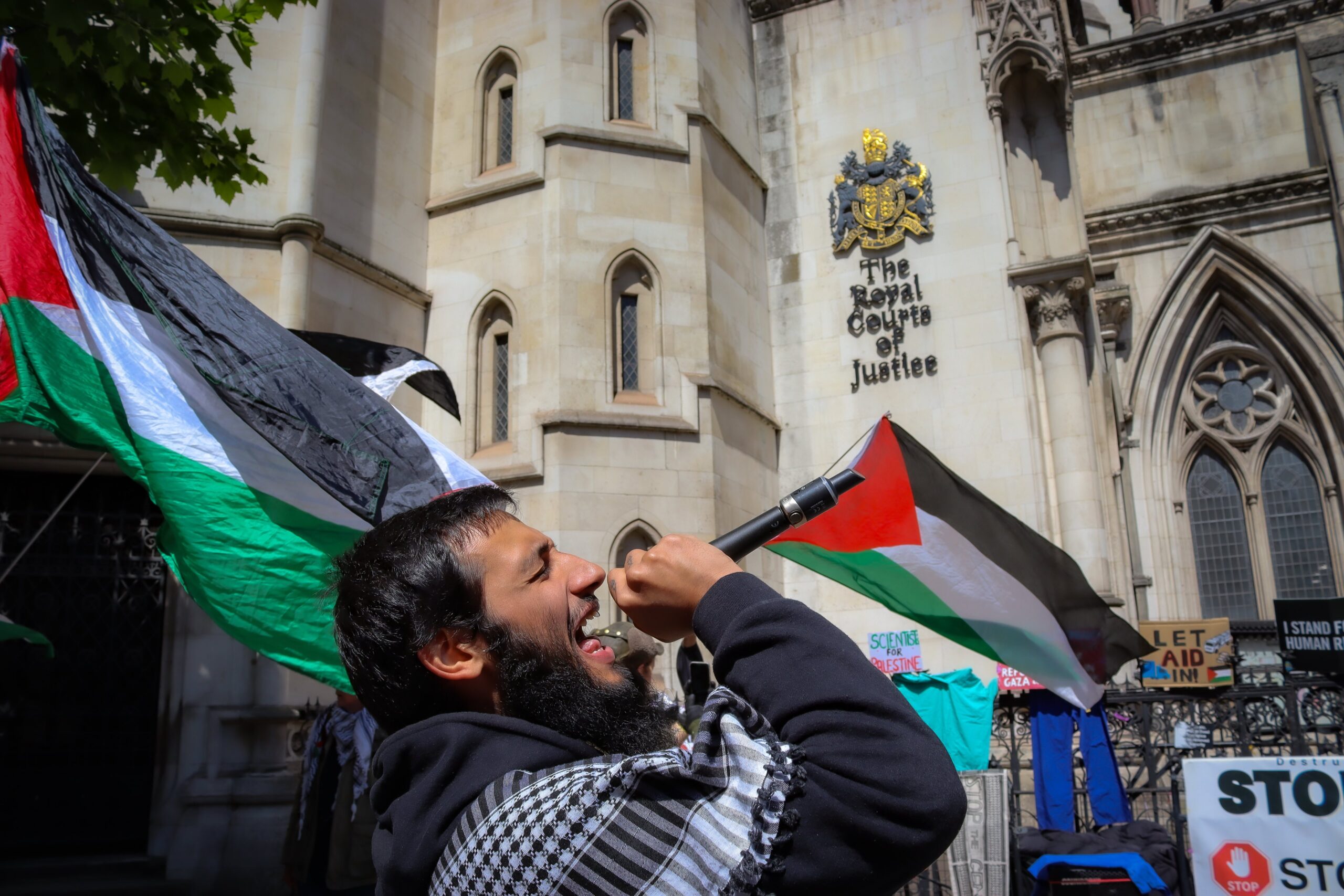
On Saturday evening, at least 86 people were arrested for protesting at HMP Wormwood Scrubs where Umer is imprisoned on remand without trial for allegedly spray painting airplanes at RAF base Brize Norton. Flight transponder data published last summer showed that Israeli Air Force KC-707 “Re’em” aerial refuelling planes were utilising RAF Brize Norton in transit to Gaza during two apparent war crimes in October 2024.
Umer suffers from a rare genetic disorder, Limb-Girdle Muscular Dystrophy, and is now suffering from renal failure, liver failure, and has low blood pressure and high creatine kinase levels, all signs of imminent cardiac arrest. Muscular Dystrophy severely increases the risks associated with hunger strike action; Umer was previously on hunger strike for twelve days before becoming seriously unwell and unable to walk. The prison managed his refeeding by giving him protein shakes and biscuits, which is highly dangerous.
A spokesperson for the campaign group Prisoners for Palestine, said:
“Umer absolutely must have compassionate bail in order to heal, all the hunger strikers should. The prison is simply not equipped to care for someone with Umer’s condition. Umer could have died in the intensive care unit on Sunday morning without his family ever knowing. The demands of his hunger strike and thirst strike, as the demands of the whole campaign have been, were morally and legally reasonable; he wanted an end to his censorship, bail, the right to a fair trial, an end to the unfounded terror link in Palestine Action protest cases, a public inquiry into the Gaza genocide and the UK’s complicity, and transparency around the potential use of RAF spy flights during the murder of 3 British aid workers in Gaza.
We are extremely proud of Umer and all the hunger strikers. They have achieved so much: the £2 billion contact between Israeli weapons company Elbit Systems, whose entire business model is built on the destruction of Palestinian life, and the Ministry of Defense has been dropped; prisoners including Umer have received previously censored mail; and after months of asking the prison governor for a meeting, Amy Frost has finally met with Umer. But at what cost? The hunger strikers were at death’s door, in disbelief that the British state is willing to let its own citizens die in order to stay allied in Israel’s genocide of the Palestinian people. They will never be the same again.”
The other hunger strikers have not been recovering well. Kamran Ahmed, who was on hunger strike for 67 days, has been hospitalised multiple times due to abnormal heartbeat and doctors said he is now showing signs of heart failure. Kamran’s sister Shahmina Alam, who is a health worker said:
“The hunger and thirst strikers have shown that the prison healthcare system is not fit for purpose. There are systemic failures to provide care which is dignified, timely or even life-saving. The admission of prisoners to hospital has shown these prisoners are not treated as patients or even humans. They are dehumanised, handcuffed in their sleep and in the shower, and are given no privacy, confidentiality, or respect. This has left prisoners feeling uncomfortable, and even deeply afraid of receiving care in hospital. The prisoners have witnessed failures in healthcare which has led to deaths, and there is no doubt the insufficient action and neglect of the prison system has contributed to the decline of our loved ones. All humans deserve dignified and timely care, prisoners are no different.”
Umer himself gave this statement over the phone:
“Assalamu alaykum wa rahmatullahi wa barakatuh. As you all know, on day 14 of my hunger strike I began my water strike. On the morning of day 16, after the amazing show of solidarity, strength and bravery the night before by all of you on the outside, the prison took me to the hospital. At the hospital, in the afternoon I was given a choice between treatment and likely death within the next 24 hours due to kidney failure, acute liver failure, and potential cardiac arrest.
At this moment, for two reasons I decided on day 17 to end both my water strike and my hunger strike. The first is that I am too strong, too loud, too powerful, and we as a collective are also too strong, too powerful, and there is so much we can do to affect change, and I ask Allah to take my life when He is pleased with me and not before, and this clearly was not my time.
And the second reason is that they have shown without a doubt that they have no concern for our lives and they do not care if we die in these cells, if David Lammy wishes to see me dead, if Keir Starmer wishes to see me dead, they can come and do it themselves. Until then we keep fighting, we keep resisting, and what I’ve seen over this past weekend from myself and from all of you, is that the muqawamah will always, always live on no matter what happens to any of us. Assalamu alaykum. ”
Regarding the hunger strikes, MP Diane Abbott said:
“Everyone has the right to protest, or should have. Those rights are enshrined in the European Convention on Human Rights. We know the ECHR is under attack from the Right, but this government still says it supports it.
But there is one thing to say you support it, but it is quite another to support it in practice. We know that this government has supported the genocide in Gaza. Keir Starmer said very early on that Israel did have the right to withhold food and water.
The British government has also gone much further that other European governments that are also staunch supporters of Israel. It has bombed Yemen, partly in an effort to destroy those who oppose Israel’s genocide. It has provided intelligence to Israel that helps it identify targets in Gaza.
But the public does not agree. In poll after poll, they public supports Gaza, opposes Israel’s actions, and opposes the British government support for those actions. The government’s response to this criticism and the protests that inevitably follow has been a police one. They cannot win the argument, so they demonise and criminalise their opponents. They have treated protestors as terrorists.
That is why we should all support those who have been on hunger or other strikes. How they have been treated is a moral outrage. They are fighting for all our rights to protest. And they are fighting to stop the genocide in Gaza. They deserve the support of every decent human being.“