Category: Uncategorized

  • The Collective Hunger Strike Ends

    Today, 27th January 2026, we announce the end of Umer Khalid’s hunger and thirst strike, who was the last remaining hunger striker, and with it, the end of the collective open-ended hunger strike campaign that started on Balfour day, November 2nd 2025.

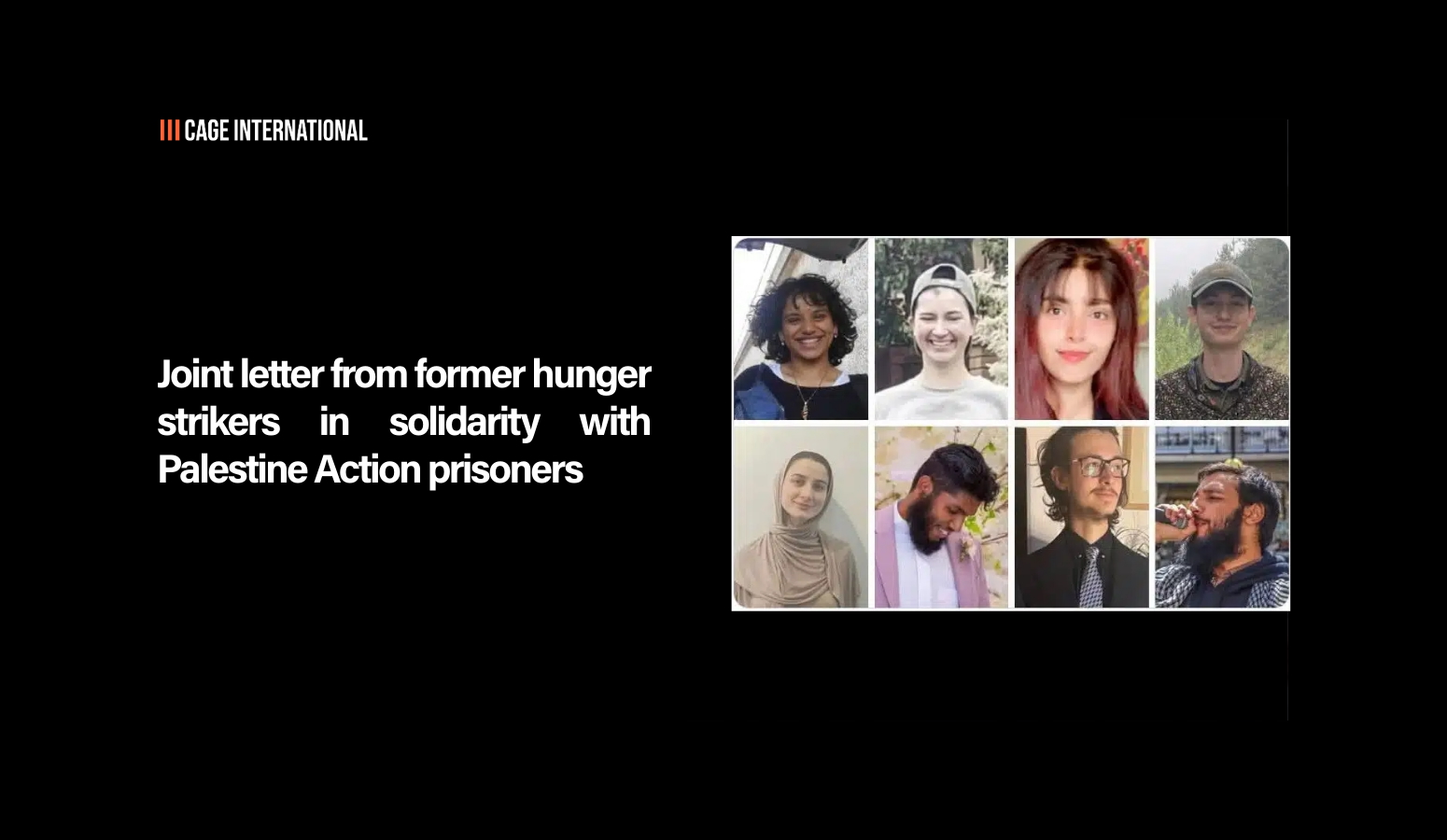
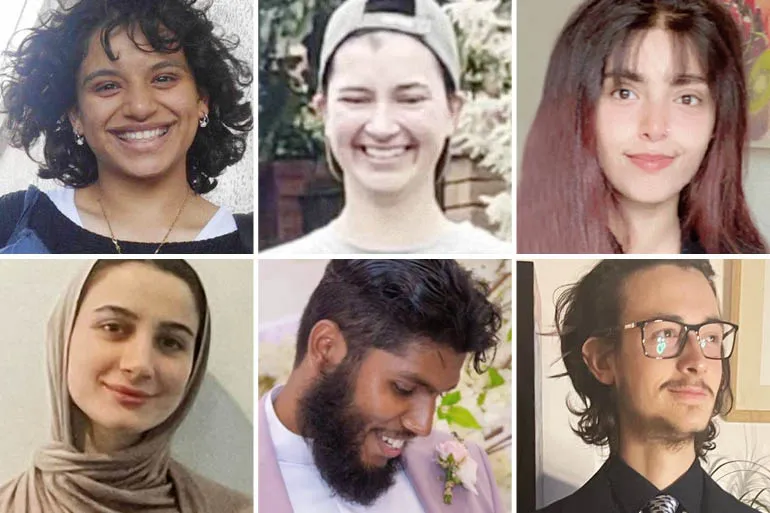
    8 hunger strikers across 6 different British prisons chose to use their own incarcerated bodies to resist from deep within the prison walls for Palestine. In every demand they made, and every statement they wrote, they centered Palestinian liberation, and inspired by the unconquerable spirit of Palestinian resistance, they resisted until their bodies gave up on them, and after that too.

    This hunger strike has forever changed the landscape of British activism for Palestine, just as it has permanently altered the bodies of the hunger striking prisoners, challenging the boundaries of what we deem is possible in standing up to the Zionist military-industrial complex on British soil, and proving to us, above all, that our bodies are all we need to fight for Palestinian liberation, no matter where we are or what conditions we find ourselves bound to.

    Umer ended his strike after 17 days of hunger striking and 3 days of a thirst strike, during which he met with the prison governor of HMP Wormwood Scrubs, Amy Frost, in order to discuss prison censorship, one of the main demands of the hunger strike campaign. As a result of the meeting, Umer has now received all of his previously withheld mail and clothes, and his restrictions on visits, which have been heavily limited ever since being held on remand in July 2025, have also been lifted. Umer won this victory – of being deserving of the fundamental human rights for all prisoners – after he had starved his body to draw attention to the barbaric cruelty of the prison system, operating on orders from the British state – treatment our prisoners have all been subjected to just because they dared to stand up to Elbit Systems, the military arm of the Zionist entity Britain is courting for genocide. Umer and the other hunger strikers are proof that the British state is willing to let its own citizens die at the behest of a foreign genocidal entity. Despite their best efforts, the hunger strikers were not silenced, but live, resisting and defiant.Throughout the hunger strike campaign, directly because of the courageous resistance and sacrifices of the hunger strikers, Elbit has been exposed and its days are numbered. The loss of the £2billion defence contract it had been set up to win is a victory for the hunger strikers; because Elbit’s entire business model, its very existence, is built on the destruction of Palestinian life, the lucrative profits it would have received would allow it to test more weapons in its business to annihilate the Palestinian people. The loss means it has lost its foothold here, and as the hunger strike has demonstrated to us, direct action will soon drive it out for good.

    The greatest achievement of the hunger strikers is that they have reinvigorated a movement on the streets: they have awakened an uprising. The state thought they could crush dissent and for a few months it seemed they may have been right. But what we have seen with this hunger strike is an upsurge of people’s refusal to accept watching from a distance, a refusal of the government’s participation in genocide – and a return to direct action against the direct architecture of the genocide itself.

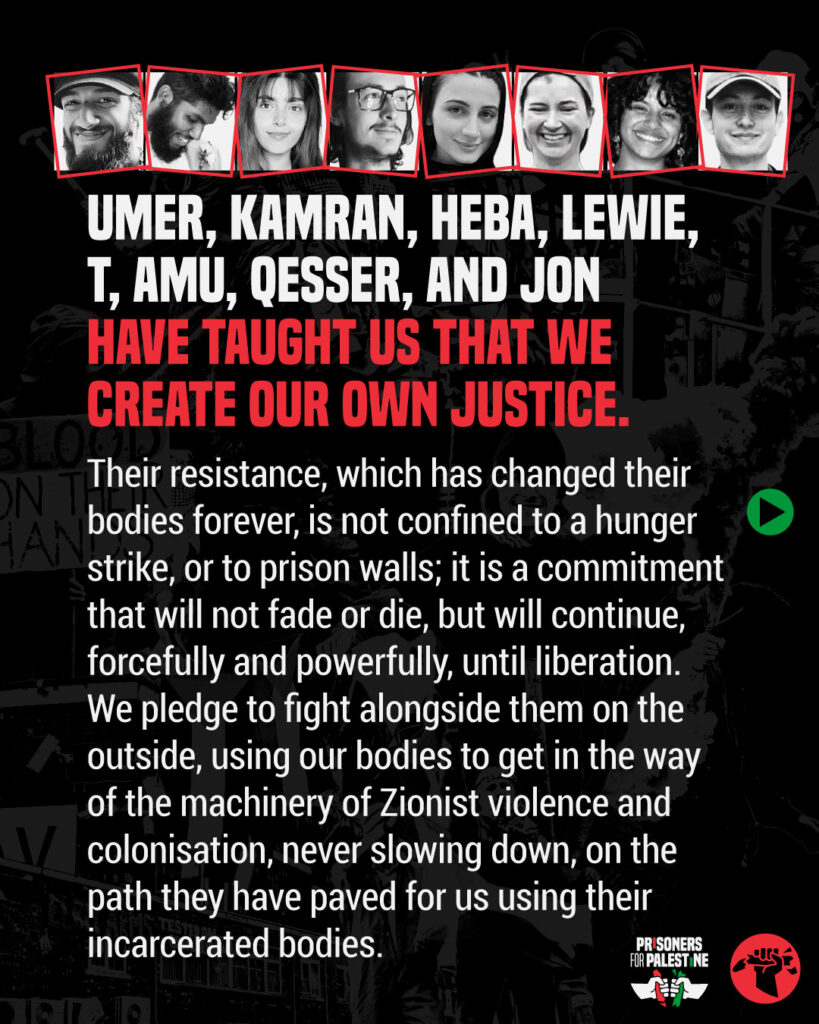
    Umer, Kamran, Heba, Lewie, T, Amu, Qesser, and Jon have taught us that we create our own justice. Their resistance, which has changed their bodies forever, is not confined to a hunger strike, or to prison walls; it is a commitment that will not fade or die, but will continue, forcefully and powerfully, until liberation. We pledge to fight alongside them on the outside, using our bodies to get in the way of the machinery of Zionist violence and colonisation, never slowing down, on the path they have paved for us using their incarcerated bodies.

    Until every factory is shut down, until every cage is empty, until every inch of Palestine is liberated, our resistance continues.

  • Umer Khalid in medical crisis after 17 days of hunger strike and 3 days of thirst strike

    Umer Khalid in medical crisis after 17 days of hunger strike and 3 days of thirst strike

    22-year-old Umer Khalid ended his strike during which he met with the prison governor of HMP Wormwood Scrubs, Amy Frost, in order to discuss his prison conditions. As a result of the meeting, Umer recieved his previously withheld mail and clothes, and his restrictions on visits, which have been heavily limited ever since being held on remand in July 2025, were also lifted.

    His 17-day hunger strike and 3-day thirst strike ended after being rushed to the intensive care unit in hospital, suffering multiple organ failure. Umer’s family were not alerted that he was admitted to the hospital or given access to his medical reports.

    On Saturday evening, at least 86 people were arrested for protesting at HMP Wormwood Scrubs where Umer is imprisoned on remand without trial for allegedly spray painting airplanes at RAF base Brize Norton. Flight transponder data published last summer showed that Israeli Air Force KC-707 “Re’em” aerial refuelling planes were utilising RAF Brize Norton in transit to Gaza during two apparent war crimes in October 2024.

    Umer suffers from a rare genetic disorder, Limb-Girdle Muscular Dystrophy, and is now suffering from renal failure, liver failure, and has low blood pressure and high creatine kinase levels, all signs of imminent cardiac arrest. Muscular Dystrophy severely increases the risks associated with hunger strike action; Umer was previously on hunger strike for twelve days before becoming seriously unwell and unable to walk. The prison managed his refeeding by giving him protein shakes and biscuits, which is highly dangerous.

    A spokesperson for the campaign group Prisoners for Palestine, said:

    Umer absolutely must have compassionate bail in order to heal, all the hunger strikers should. The prison is simply not equipped to care for someone with Umer’s condition. Umer could have died in the intensive care unit on Sunday morning without his family ever knowing. The demands of his hunger strike and thirst strike, as the demands of the whole campaign have been, were morally and legally reasonable; he wanted an end to his censorship, bail, the right to a fair trial, an end to the unfounded terror link in Palestine Action protest cases, a public inquiry into the Gaza genocide and the UK’s complicity, and transparency around the potential use of RAF spy flights during the murder of 3 British aid workers in Gaza.

    We are extremely proud of Umer and all the hunger strikers. They have achieved so much: the £2 billion contact between Israeli weapons company Elbit Systems, whose entire business model is built on the destruction of Palestinian life, and the Ministry of Defense has been dropped; prisoners including Umer have received previously censored mail; and after months of asking the prison governor for a meeting, Amy Frost has finally met with Umer. But at what cost? The hunger strikers were at death’s door, in disbelief that the British state is willing to let its own citizens die in order to stay allied in Israel’s genocide of the Palestinian people. They will never be the same again.”

    The other hunger strikers have not been recovering well. Kamran Ahmed, who was on hunger strike for 67 days, has been hospitalised multiple times due to abnormal heartbeat and doctors said he is now showing signs of heart failure. Kamran’s sister Shahmina Alam, who is a health worker said:

    The hunger and thirst strikers have shown that the prison healthcare system is not fit for purpose. There are systemic failures to provide care which is dignified, timely or even life-saving. The admission of prisoners to hospital has shown these prisoners are not treated as patients or even humans. They are dehumanised, handcuffed in their sleep and in the shower, and are given no privacy, confidentiality, or respect. This has left prisoners feeling uncomfortable, and even deeply afraid of receiving care in hospital. The prisoners have witnessed failures in healthcare which has led to deaths, and there is no doubt the insufficient action and neglect of the prison system has contributed to the decline of our loved ones. All humans deserve dignified and timely care, prisoners are no different.

    Umer himself gave this statement over the phone:

    Assalamu alaykum wa rahmatullahi wa barakatuh. As you all know, on day 14 of my hunger strike I began my water strike. On the morning of day 16, after the amazing show of solidarity, strength and bravery the night before by all of you on the outside, the prison took me to the hospital. At the hospital, in the afternoon I was given a choice between treatment and likely death within the next 24 hours due to kidney failure, acute liver failure, and potential cardiac arrest.

    At this moment, for two reasons I decided on day 17 to end both my water strike and my hunger strike. The first is that I am too strong, too loud, too powerful, and we as a collective are also too strong, too powerful, and there is so much we can do to affect change, and I ask Allah to take my life when He is pleased with me and not before, and this clearly was not my time.

    And the second reason is that they have shown without a doubt that they have no concern for our lives and they do not care if we die in these cells, if David Lammy wishes to see me dead, if Keir Starmer wishes to see me dead, they can come and do it themselves. Until then we keep fighting, we keep resisting, and what I’ve seen over this past weekend from myself and from all of you, is that the muqawamah will always, always live on no matter what happens to any of us. Assalamu alaykum.

    Regarding the hunger strikes, MP Diane Abbott said:

    “Everyone has the right to protest, or should have. Those rights are enshrined in the European Convention on Human Rights. We know the ECHR is under attack from the Right, but this government still says it supports it.

    But there is one thing to say you support it, but it is quite another to support it in practice. We know that this government has supported the genocide in Gaza. Keir Starmer said very early on that Israel did have the right to withhold food and water.

    The British government has also gone much further that other European governments that are also staunch supporters of Israel. It has bombed Yemen, partly in an effort to destroy those who oppose Israel’s genocide. It has provided intelligence to Israel that helps it identify targets in Gaza.

    But the public does not agree. In poll after poll, they public supports Gaza, opposes Israel’s actions, and opposes the British government support for those actions. The government’s response to this criticism and the protests that inevitably follow has been a police one. They cannot win the argument, so they demonise and criminalise their opponents. They have treated protestors as terrorists.

    That is why we should all support those who have been on hunger or other strikes. How they have been treated is a moral outrage. They are fighting for all our rights to protest. And they are fighting to stop the genocide in Gaza. They deserve the support of every decent human being.

  • BREAKING: AROUND 100 ARRESTED AS POLICE VIOLENTLY ATTACK PROTESTORS ON SECOND DAY OF UMER KHALID’S THIRST STRIKE

    BREAKING: AROUND 100 ARRESTED AS POLICE VIOLENTLY ATTACK PROTESTORS ON SECOND DAY OF UMER KHALID’S THIRST STRIKE

    Yesterday evening at least 86 people were arrested for protesting at Wormwood Scrubs to demand that 22-year-old Umer Khalid is given in writing the promises HMP Wormwood Scrubs prison governor Amy Frost made to him regarding his treatment in prison.

    In response to this breaking story, a spokesperson for Prisoners for Palestine said:

    “Last night, there was a violent, and wildly disproportionate response by the police to the protest outside Wormwood Scrubs, as Umer entered the second day of his thirst strike.

    Attendees, including pensioners, have been punched, kicked and bound face down on the floor by the police.  A Bronze Commander has been filmed repeatedly punching a restrained protester. 

    Almost one hundred violent arrests laid bare the fragility and fear of the British state. Our prisoners have shown no bars can stop their resistance, and outside no amount of violence will stop us escalating for Palestine.

    Hundreds have committed to drive Elbit out of Britain with direct action following the hunger strikes, and this repression and violence will only make us stronger.”

    In response to police accusations of aggravated trespass, a witness described the accusations as “all nonsense”, saying;

    “There’s nothing to say you can’t go on the grounds. It was a visitor entrance with huge open gates and no security staff. Nobody was asked to leave and nobody blocked prison staff. In fact, I saw prison staff walk around us and go inside the entrance that protesters are wrongfully accused of blocking.”

    Umer, who suffers from a rare genetic disorder, Limb-Girdle Muscular Dystrophy, and is currently being held on remand at HMP Wormwood Scrubs, is the last remaining hunger striker to participate in the Prisoners for Palestine hunger strike campaign. Umer is now on day sixteen of his hunger strike and day 3 of his thirst strike. The fact that Umer suffers from Limb-Girdle Muscular Dystrophy severely increases the risks associated with his hunger strike action. He was initially on hunger strike for twelve days before becoming seriously unwell and unable to walk.

    Umer has been charged in connection to an action that took place at the RAF Brize Norton site, where two military aircrafts were spray painted. Unfiltered flight transponder data  published last summer showed that Israeli Air Force KC-707 “Re’em” aerial refuelling planes were landing in RAF Brize Norton before departing to Gaza. One Israeli plane which stopped in RAF Brize Norton was in the sky over Gaza around the time of two apparent war crimes, including in October 2024, when the IAF bombed a residential complex in the northern city of Beit Lahiya, killing 73 people. 

  • Take action for Umer: Email prison governor Amy Frost

    Take action for Umer: Email prison governor Amy Frost

    An email template to send to Amy.frost@justice.gov.uk

    For the attention of HMP Wormwood Scrubs prison governor Amy Frost,

    Subject: Meet with hunger striker Muhammed Umer Khalid

    I am writing to you as a matter of great urgency regarding a prisoner under your care, Muhammed Umer Khalid (A4415FH), who is currently on hunger strike. As the prison governor, it is your duty to ascertain Umer’s reasons for food refusal and support him in understanding and resolving the situation which you have thus far failed to do. It is imperative that you fulfil your duty and arrange a meeting with him immediately to discuss his concerns, in order to end his hunger strike safely.

    Umer has warned if you fail to fulfil your responsibility as prison food refusal policy dictates, he will go on a thirst strike on Saturday 24th January 2026.
    The urgency of this situation and the threat to his life, which is in your hands, cannot be understated.

    I remind you that Umer resumed his hunger strike after a short pause at Christmas, which is extremely dangerous given he suffers from a rare genetic disorder, Limb-Girdle Muscular Dystrophy.

    His demands are very reasonable and there is no reason why you would refuse to meet with him, putting his life at risk.

    Umer has been held on remand since June 2025 in appalling conditions, and will face over a year and a half in prison before facing trial. He is not convicted of any crime and has notably suffered extreme and consistent religious oppression in prison along with a violation of his welfare rights and an increase in prison censorship without justification.

    You once said, “I have a really strong desire to make a meaningful difference, which is what ultimately drew me to this work. The prison service has allowed me to channel that motivation in ways I never expected.”

    You now have an opportunity here to make a meaningful difference for Umer by simply meeting him. Why are you refusing to do so?

    I urge you to arrange a meeting with him urgently in order to end his hunger strike safely.

    Sincerely,

  • Read our letter to the government regarding hunger striker Umer Khalid

    Read our letter to the government regarding hunger striker Umer Khalid

    To the Home Secretary, 

    We are writing on behalf of Prisoners for Palestine in Britain regarding the last remaining hunger striker, Umer Khalid, currently being held on remand at HMP Wormwood Scrubs. Umer has been on hunger strike for 9 days after resuming his hunger strike on 10th January 2026 following a short pause. He has warned that he will escalate his action to a thirst strike as of Saturday 24th January, should the government continue to refuse a meeting. 

    Despite numerous hospitalisations, growing public pressure, and even international support in addition to some individuals entering into their eighth week of hunger strike, you have refused to engage and have ignored all attempts at dialogue in order to consider the health and safety of individuals and ensure they avoid being harmed. Concerned members of the medical community have written to the Health and Justice Commission to the NHS; and in Derry district council, a motion has been passed to support the hunger strikers, express concern for their wellbeing,  and also denounce the proscription of Palestine Action. 

    During the hunger strike, there has been consistent medical neglect, harassment and degrading treatment by prison staff including prison governors towards the hunger strikers. There are multiple instances of the prison administration in the various prisons breaking national prison regulations. All of this is closely monitored and logged by us.

    Today, we write to reaffirm that our demands are clear. We will not be dissuaded by your silence, as support for the hunger strike grows both here in Britain and internationally. It is your duty as a public servant to act in the interests of the citizens of this country, and by failing to do so you are abdicating responsibility, and we will hold you to account.

    It is morally and legally imperative that the government immediately fulfils the following demands in order to end the hunger and thirst strike:

    1. End all censorship 

    We demand to be able to send and receive communications without restriction, surveillance, or interference from the prison administration. Freedom of expression is a fundamental human right that is vital for prisoners, whose voices are already systematically silenced. Censorship inside prisons is a tool of control used to punish resistance. Letters, phone calls, political statements, books and all other forms of expression must be respected. 

    2. Immediate bail

    We demand that we be released from custody while awaiting trial. Holding people on remand, in some cases indefinitely, is a deliberate abuse of power, used to punish prisoners before they have even faced a court or been convicted of any crime. Some of us will have been imprisoned for nearly two years without a conviction. The right to a fair trial must include the right to prepare for it in freedom, not behind bars.

    3. Re-open the Gaza inquiry

    On 4 June 2025, Jeremy Corbyn MP introduced a bill into the UK House of Commons calling on the government to establish an independent inquiry into UK involvement in Israeli military operations in Gaza, including the supply of weapons, surveillance aircraft and use of Royal Airforce bases.

    At the second reading on 4 July 2025, the government rejected this bill and refused to establish such an inquiry. The public deserves to know the full scale of their government’s participation in genocide.

    4. Release surveillance footage from RAF spy flights the night of the killing of British aid workers

    Three British aid workers were killed in a Israeli strike in Gaza, in April 2024.

    John Chapman, 57, James Henderson, 33, and James Kirby, 47, were among the seven World Central Kitchen workers killed in the strike. 

    They were travelling with a convoy that had just unloaded more than 100 tonnes of food aid brought from overseas, according to the charity. 

    All three vehicles in the convoy were hit while leaving a warehouse in Deir al-Balah, south of Gaza City. 

    Rishi Sunak, prime minister at time, said the deaths “appalled” him. Why have they never seen justice, or even a clear answer as to how and why this happened? 

    5. Full disclosure of damage figures from Brize Norton action

    We call on the government to open the dialogue for discussion and negotiations to commence in order to avoid any further harm being inflicted on citizens of your country through your inaction and in order for the hunger strike to be ended safely.

    Please respond to this letter as soon as possible.

  • Last remaining hunger striker will go on thirst strike in five days if government continues to refuse a meeting

    Last remaining hunger striker will go on thirst strike in five days if government continues to refuse a meeting

    22-year-old Umer Khalid, who suffers from a rare genetic disorder, Limb-Girdle Musclar Dystrophy, and is currently being held on remand at HMP Wormwood Scrubs, is the last remaining hunger striker to participate in the Prisoners for Palestine hunger strike campaign. Umer, now on day nine of his hunger strike, resuming after a short pause on 10th January 2026, has warned he will undertake a thirst strike if the government continues to refuse a meeting within the next five days. 

    Umer, who is from Manchester, has been charged in connection to an action that took place at the RAF Brize Norton site, where two military aircrafts were decommissioned allegedly causing millions of pounds worth of damage. It was after this action took place that the then foreign secretary Yvette Cooper made the controversial decision to proscribe Palestine Action in the UK, making support for it a terrorist offence. Significantly, he has suffered severe mistreatment at the hands of the prison since being held on remand in July 2025 last year. 

    The fact that Umer suffers from Limb-Girdle Muscular Dystrophy severely increases the risks associated with his hunger strike action. He was initially on hunger strike for twelve days before becoming seriously unwell and unable to walk, and has now stated that he intends to go on a thirst strike if his demands are not met.  He has also asked prison staff not to intervene in the event he becomes unconscious.

    Prisoners for Palestine have documented that: 

    “Umer has continuously been subjected to violent abuse by the prison, namely the abuse and denial of his religious and welfare rights. He was initially barred from showering or using a prayer mat to perform his prayers, and denied access to a Quran which the prison permitted only after public outrage. Denial of his religious rights has continued, however, with prison officers physically assaulting him, putting him in solitary confinement, cutting off his clothes and strip searching him for giving the call to prayer. His calls, visits and access to post are also severely restricted and monitored.”


    In a statement, Umers friend expressed:

    “It terrifies me that the government have been so incredibly negligent during this hunger strike, proving on multiple occasions that the health of the prisoners is not something that concerns them enough to act on their responsibilities or simply just meet the demands. But an even scarier notion is processing the fact that someone you love and care for so deeply feels as though they have no other options left, in what should be an unnecessary battle for basic rights and dignity. That the repression is so strong, that this is their only avenue of resistance left. And when you pair that with a person as determined, brave, and resilient as we all know Umer is, as loyal in his love for the Palestinians as he is to his family and friends, I just really pray that the government realise how absolutely despicable they are and start to enter some form of negotiation soon, insha’Allah. I am so incredibly proud of Umer, we all are, and we miss him.”

  • Hunger Strikers’ Demands Met on 73rd Day as Three End Strike

    Hunger Strikers’ Demands Met on 73rd Day as Three End Strike

    Today, Kamran Ahmed, Heba Muraisi and Lewie Chiaramello announce their decision to end their hunger strikes as Elbit Sytems UK was denied a crucial Government contract, a key demand of the hunger strikers.

    Heba Muraisi, Kamran Ahmed, Lewie Chiaramello, Teuta Hoxha, Jon Cink, Qesser Zuhrah, and Amu Gib have now all begun re-feeding in accordance with health guidelines. It was announced today that Elbit Systems lost out on a £2 billion contract that would have seen them train 60,000 British troops each year. Since 2012, Elbit have won over 10 public contracts, marking a shift in their popularity amongst officials. 

    The £2 billion contract, which would have seen Elbit provide training to the British Army over ten years, was lost despite the best efforts of officials both in the Ministry of Defence and British army, who it was revealed had been colluding with both Elbit Systems UK and its parent company Elbit Systems in backroom meetings and ‘tours’ to the capital of Palestine, Jerusalem. 

    On Friday 9th January 2026, in a significant breakthrough, the national leaders of prison healthcare finally met with representatives of the hunger striking prisoners, at the behest of the Ministry of Justice, to discuss prison conditions and treatment recommendations. The decision comes as the group Prisoners for Palestine declared a number of victories of the hunger strike, outlining them in a statement:

    In addition to this key demand being met, we want to take this opportunity to reveal the various victories achieved across the duration of the hunger strike:

    • In the past few weeks alone, 500 people have signed up to take direct action against the genocidal military-industrial complex, more than the amount of people who took action with Palestine Action over its 5 year campaign. During that 5 year campaign, 4 Israeli weapons factories were shut down. Elbit Systems is living on stolen time – we will see it shut down for good, not because of the government, but because of the people.
    • Heba’s transfer to HMP Bronzefield has been accepted by HMP Newhall, where she is currently held in intentional isolation from her family and friends.
    • T. Hoxha has been offered a meeting with the head of JEXU (Joint Extremism Unit) at her prison, the very same organisation that orchestrates the prisoners’ treatment as ‘terrorists’.
    • Despite the cruel and constant medical neglect of the hunger strikers; including not logging food refusal, refusal of ambulances in life threatening emergencies, and degrading treatment in hospital; the national heads of prison healthcare have met with us at the behest of the Ministry of Justice. 
    • During the hunger strike, some of the prisoners started receiving bulk packages of witheld mail, and in one case received an apology from prison staff for a letter that was delayed by 6 months. Books on topics of Gaza and feminsim have also been given after months of waiting. 
    • In pursuit of a fair trial, the hunger strikers demanded disclosure of export licenses for the last 5 years from Elbit Systems. After repeated requests, this information was disclosed to an independent researcher by the Department of Trade during the hunger strike.”

    The hunger strikers made British history, participating in the largest coordinated and longest hunger strike in Britain lasting in total 73 days, with Heba Muraisi ending at 73 days. 

    The campaign group Prisoners for Palestine emphasised that the most valuable win of the hunger strike has been the surge in commitment to direct action: ​​​​​​​

    “Our prisoners hunger strike will be remembered as a landmark moment of pure defiance; an embarrassment for the British state. It exposed to the world Britain has political prisoners in service of a foreign genocidal regime, and has seen hundreds of people commit to take direct action in the prisoners footsteps.

    While these prisoners end their hunger strike, the resistance has just begun. Banning a group and imprisoning our comrades has backfired on the British state, direct action is alive and the people will drive Elbit out of Britian for good”

    Amu Gib said:

    “We have never trusted the government with our lives, and we will not start now. We will be the ones to decide how we give our lives to justice and liberation.”

    Lewie said:

    “It is definitely a time for celebration. A time to rejoice and to embrace our joy as revolution and as liberation. We do this because of Palestine, because we’ve been inspired, because we’ve been empowered to take action and to try to realise our dreams for a free Palestine, for an emancipated world.”

  • Demands Met on 73rd Day as Three End Strike

    Demands Met on 73rd Day as Three End Strike

    After 73 days of hunger strike which began on Balfour day, 2nd November 2025, as some prisoners are facing imminent death, Heba Muraisi, Kamran Ahmed, and Lewie have ended their hunger strikes. The decision to end their hunger strikes came as it was revealed that Elbit Systems UK was denied a vital £2 billion army training contract with the Ministry of Defence, a key demand of the hunger strikers.

    The contract, which would have seen Elbit Systems provide training to the British Army over ten years, was lost despite the best efforts of officials both in the Ministry of Defence and British army, who it was revealed had been colluding with both Elbit Systems UK and its parent company Elbit Systems in backroom meetings and ‘tours’ to the capital of Palestine, Jerusalem, in a desperate attempt to further entrench their genocidal alliance and help them win the contract. 

    The abrupt cancellation of this deal is a resounding victory for the hunger strikers, who resisted with their incarcerated bodies in order to shed light on the role of Elbit Systems, Israel’s largest weapons manufacturer, in the colonisation and occupation of Palestine. Since 2012, Elbit has won 25 public contracts in the UK totalling more than £333m; the loss of this £2 billion contract marks a significant shift in this sordid “strategic alliance”. With this victory it has never been clearer that Elbit’s days in Britain are numbered. 

    In addition to this key demand being met, we want to take this opportunity to celebrate the various victories achieved across the duration of the hunger strike:

    • In the past few weeks alone, hundreds of people have signed up to take action against the genocidal military-industrial complex, more than the amount of people who took action with Palestine Action over its 5 year campaign. During that 5 year campaign, 4 Israeli weapons factories were shut down. Elbit Systems is living on stolen time – we will see it shut down for good, not because of the government, but because of the people.
    • Heba Muraisi’s transfer to HMP Bronzefield has been accepted by HMP New Hall, where she is currently held in intentional isolation from her family and friends.
    • T. Hoxha has been offered a meeting with the head of JEXU (Joint Extremism Unit) at her prison, the very same organisation that orchestrates the prisoners’ treatment as ‘terrorists’.
    • Despite the cruel and constant medical neglect of the hunger strikers; including not logging food refusal, refusal of ambulances in life threatening emergencies, and degrading treatment in hospital; the national heads of prison healthcare have met with us at the behest of the Ministry of Justice. 
    •  During the hunger strike, some of the prisoners started receiving bulk packages of witheld mail, and in one case received an apology from prison staff for a letter that was delayed by 6 months. Books on topics of Gaza and feminism have also been given after months of waiting. 
    • In pursuit of a fair trial, the hunger strikers demanded disclosure of export licenses for the last 5 years from Elbit Systems. After repeated requests, this information was disclosed to an independent researcher by the Department of Trade during the hunger strike.

    The continued imprisonment of the hunger strikers will remain a stain on Britain’s facade of being a “democratic” country, with any spine of law and order. This pathetic and cowardly British government cannot resist authoritarianism; it uses fear to deter rightful protest and dissent, echoing the use of administrative detention used against the Palestinian people. 

    The hunger strike has cemented this fact to the country, and across the world; Britain has political prisoners in service of a foreign genocidal regime. In a time of worsening political repression, and widespread propaganda about a non-existent ‘ceasefire’ in Gaza, the hunger strike stands as a testament of continued defiance. 

    The hunger strikers have allowed those of us who were fearful of state repression to be brave – to go out once again onto the streets and fight for justice. The government should know they cannot ban a concept. Cowardly banning one group can not stop a belief, a movement, a people. This is only the start of our collective fight to free us all and the road to freedom runs through Palestine.

    As these victories are declared, we turn our efforts and attention to Umer Khalid, the last remaining hunger striker, who continues to use his body as a weapon against the state in pursuit of justice.

  • Global authors and scholars declare support for Palestine hunger strikers and Greta Thunberg

    Global authors and scholars declare support for Palestine hunger strikers and Greta Thunberg

    Naomi Klein, Angela Davis, Judith Butler, Sally Rooney and China Mieville join global scholars in declaration of solidarity with hunger striking prisoners for Palestine and Greta Thunberg

    Dozens of distinguished scholars and authors from around the world have made a declaration in solidarity with prisoners in the UK whose long detention on remand on charges relating to activism for Palestine has sparked criticism from human rights organisations and UN experts. They include Naomi Klein, Angela Davies and Judith Butler alongside global scholars from a diverse set of academic disciplines, journalists George Monbiot and Owen Jones, and authors Sally Rooney and China Miéville.

    Professors of Law and Jurisprudence and internationally renowned legal experts are among those who have added their names, including Richard Falk, Queen Mary University of London and former UN Special Rapporteur for human rights in the Occupied Palestinian Territories, Lynn Welchman, Professor of Law, SOAS University of London , Penny Green, Professor of Law and Globalisation, Queen Mary University of London, Emilios Christodoulidis, Chair of Jurisprudence, University of Glasgow, and Neve Gordon, Professor of International Law, Queen Mary University of London.

    Three of the prisoners, Heba Muraisi, Kamran Ahmed and Lewie Chiaramello are facing imminent danger of death. Heba reached 70 days without food on 11 January, while Kamran reached day 63 and Lewie, day 49. A fourth prisoner, Umer Khalid also announced on January 11 that he has restarted his hunger strike.

    The statement wording also highlights the signatories’ condemnation of the arrest of Greta Thunberg on terrorism charges while protesting in solidarity with the prisoners before Christmas.

    The statement, which is published today on the Protest Not Terrorism website echoes the slogan which Greta Thunberg wrote on the placard she was carrying when she was arrested on 23 December.

    “We oppose genocide, we support the Palestine Action prisoners”

    A spokesperson for Protest not Terrorism open letter collective said:

    “This statement is a declaration of support for the campaign by prisoners for the respect of their fundamental rights to a fair trial, to prompt and appropriate medical treatment, to uncensored communications with their legal representatives and the removal of punitive and draconian conditions imposed by the Prison Service triggered by the widely-condemned proscription of Palestine Action. The signatories also affirm their solidarity with Greta Thunberg after her shocking arrest on terrorism charges for expressing solidarity with the prisoners.”

    Writing in the Guardian on 7 January, George Monbiot said:

    “The hunger strikers’ demands seem reasonable to me: release on bail; the right to a fair trial (they claim the government has withheld key documents); lifting the ban on Palestine Action; and shutting down Elbit Systems – which has supplied weapons to a state engaged in genocide – in the UK. All these things, I believe, should be happening anyway”

    Professor Peter Hallward, one of the signatories to the statement, said:

    “The UK is now perilously close to full descent into authoritarian rule. Ministers won’t even meet with hunger-strikers who are now at death’s door. Starmer, Lammy, Cooper and Mahmood seem perfectly ready to let this country’s most committed and courageous opponents of an ongoing genocide waste away and die. Now the police have begun arresting people just for using the standard Arabic word for ‘uprising,’ marking yet another draconian step in the elimination of what’s left of our freedoms of expression and of academic inquiry.”

    Statement

    We oppose genocide, we support the Palestine Action prisoners.

    [List of signatories as of 12 January 2026, 8am]

    Signed:

    · Umberto Albarella, Professor of Zooarchaeology, University of Sheffield
    · Tariq Ali, writer and historian
    · Sandra Babcock, Clinical Professor of Law, Cornell Law School
    · Étienne Balibar, Professor emeritus of Philosophy, University of Paris X, Nanterre
    · Moazzam Begg, Senior Director of CAGE International and former Guantanamo Bay prisoner
    · Chetan Bhatt, Anthony Giddens Professor of Social Theory, London School of Economics
    · Patrick Bond, Distinguished Professor and Director of the Centre for Social Change, University of Johannesburg
    · Ray Brassier, Professor of Philosophy, American University of Beirut
    · Donna Brown, Royal Holloway UCU branch chair and NEC member
    · Wendy Brown, UPS Foundation chair, School of Social Science, Institute for Advanced Study, Princeton
    · Susan Buck-Morss, Distinguished Professor, CUNY Graduate Centre
    · Judith Butler, Distinguished Professor in the Graduate School, Department of Comparative Literature, University of California, Berkeley
    · Alex Callinicos, Emeritus Professor of European Studies, King’s College London
    John Chalcraft, Professor of Middle East History and Politics, London School of Economics
    · Tanzil Chowdhury, Senior Lecturer in Public Law, Queen Mary University of London, Co-Director of the Centre for the Critique of Law and Society
    · Emilios Christodoulidis, Chair of Jurisprudence, University of Glasgow
    · Rebecca Comay, Professor of Philosophy and Comparative Literature, University of Toronto
    · Tim Crosland, co-founder Defend Our Juries
    · Angela Davis, Distinguished Professor Emerita, History of Consciousness and Feminist Studies, University of California, Santa Cruz
    · Jodi Dean, Professor of Politics, Hobart and William Smith Colleges, Geneva, New York
    · James Dickins, Emeritus Professor of Arabic, University of Leeds
    · Jennifer Doyle, Professor of English, University of California, Riverside
    · Deepa Driver, trade unionist and academic, vice-chair of the Haldane Society of Socialist Lawyers
    · Haidar Eid, Associate Professor of Postcolonial Literature, Al-Aqsa University, Gaza, Palestine
    · Harriet Evans, Emeritus Professor of Chinese Cultural Studies at the University of Westminster and Visiting Professor in Anthropology at the London School of Economics
    · Peter Evans, West London College, Vice Chair UCU LGBT msc
    · Patrick ffrench, Professor of French, King’s College London
    Des Freedman, Professor of Media and Communication Studies, Goldsmiths University of London
    · Verónica Gago, Professor of Social Sciences, University of Buenos Aires
    · Neve Gordon, Professor of International Law, Queen Mary University of London
    · Ian Gough, Visiting Professor, London School of Economics
    · Penny Green, Professor of Law and Globalisation, Queen Mary University of London
    · Greg Grandin, Peter V and C Vann Woodward Professor of History, Yale University
    · Peter Hallward, Professor of Philosophy, Centre for Research in Modern European Philosophy, Kingston University
    · Vanja Hamzić, Professor of Law, History, and Anthropology, SOAS University of London
    · Michael Hardt, Professor of Literature, Duke University
    · Sudhir Hazareesingh, CUF Lecturer in Politics and Senior Fellow, Balliol College, University of Oxford
    Marion Hersh, Senior Lecturer, Biomedical Engineering, Glasgow University; UCU Glasgow equality rep
    · Owen Jones, journalist
    · Ronnie Kasrils, author and former minister in the government of South Africa
    · Rashid Khalidi, Professor Emeritus of History, Columbia University
    · Laleh Khalili, Al Qasimi Professor of Gulf Studies, University of Exeter
    · Naomi Klein, Associate Professor of Climate Justice, University of British Columbia
    · Darryl Li, Associate Professor of Anthropology & associate member of the Law School, University of Chicago
    · Frédéric Lordon, Research director, Centre National de la Recherche Scientifique, France
    · Ibbo Mandaza, Global Pan African Movement and Executive Chairman of the Southern African Political Economy Series (SAPES) Trust
    · Tracy McNulty, Professor of Comparative Literature and Romance Studies, Cornell University
    · Lina Meruane, Distinguished Writer in Residence, New York University
    · Sandro Mezzadra, Professor of Political Theory, University of Bologna
    · China Miéville, Salvage
    · George Monbiot, journalist and environmental activist
    · Vittorio Morfino, Professor of Philosophy, University of Milano Bicocca
    · Karma Nabulsi, Professor Emerita of Politics and International Relations, University of Oxford
    · Eva Nanopoulos, Reader in Law, Queen Mary University of London
    · Saul Newman, Professor of Politics, Goldsmiths University of London
    · Aisling O’Beirn, Associate Lecturer in Fine Art, University of Ulster, UCU Ulster Anti-Casualisation and NEC member
    · Abdaljawad Omar, Assistant Professor of Philosophy and Cultural Studies, Birzeit University, Palestine
    · Ellen Owens, University of Reading UCU branch secretary and NEC member
    · Christina Paine, London Metropolitan University UCU secretary and NEC member
    · Ilan Pappé, Professor of History and Middle Eastern Studies, and director of the European Centre for Palestine Studies, University of Exeter
    · Paul Patton, Emeritus Professor of Philosophy, University of New South Wales
    · Matt Perry, Branch Chair, Newcastle UCU and NEC member
    · Regine Pilling, Branch Secretary Westminster Kingsway College UCU and NEC member
    · Lucia Pradella, Reader in International Political Economy, King’s College London
    · Rolando Prats, Communis Press, Chief Editor
    · Nicola Pratt, Professor of the International Politics of the Middle East, University of Warwick
    · Rahul Rao, Reader in International Political Thought, University of St Andrews
    · Bruce Robbins, Old Dominion Foundation Professor in the Humanities, Columbia University
    · William I. Robinson, Distinguished Professor of Sociology, University of California, Santa Barbara
    · Sally Rooney, novelist
    · Jacqueline Rose Professor of Humanities and co-director of the Birkbeck Institute for the Humanities, University of London
    · Catherine Rottenberg, Professor of Feminist Media Studies, Goldsmiths University of London
    · Lynne Segal, Professor Emerita of Psychosocial Studies, Birkbeck, University of London
    · Richard Seymour, Salvage
    Kamila Shamsie, novelist
    · Issa Shivji, Professor Emeritus of Public Law & First Julius Nyerere Professor of Pan-African Studies, University of Dar es Salaam, Tanzania
    · Avi Shlaim, Emeritus Professor of International Relations, St Antony’s College, Oxford
    · Nikhil Pal Singh, Chair, Department of Social and Cultural Analysis, New York University
    · Panagiotis Sotiris, Assistant Professor of Sociology, University of the Aegean
    · Elettra Stimilli, Professor of Philosophy, Sapienza Università di Roma
    · Rei Terada, Professor Emerita of Comparative Literature, University of California, Irvine
    · Alberto Toscano, Emeritus Professor of Critical Theory, Goldsmiths University of London
    · Salim Vally, Professor and National Research Foundation Chair in Community, Adult and Worker Education, University of Johannesburg
    · Françoise Vergès, Senior research fellow, Sarah Parker Remond Centre for the Study of Racism and Racialisation, University College London
    · Sean Wallis, University College London UCU branch secretary and NEC member
    · Jeffery R. Webber, Professor of Politics, York University, Toronto
    · Saira Weiner, London John Moores University UCU branch chair and NEC member
    · Lynn Welchman, Professor of Law, SOAS University of London
    · Richard Wild, Principal Lecturer in Criminology, University of Greenwich, UCU Branch Co-Chair and NEC member
    · Jessica Whyte, Scientia Associate Professor of Philosophy, University of New South Wales
    · Jim Wolfreys, Reader in French and European Politics, King’s College London

  • Open letter from health workers demanding immediate action

    Open letter from health workers demanding immediate action

    Open letter to prison governors, prison healthcare providers, and commissioners at HMP Pentonville, Wormwood Scrubs, Bronzefield, Peterborough, Bristol and New Hall, NHS England Health Justice, CQC, GMC, RCGP, RCP, and hospitals providing care for the hunger strikers.

    We write to you, once again, as healthcare professionals who are shocked at this government’s continued neglect of the health and rights of eight individuals who are currently – or have recently been – on hunger strike: Qesser Zuhrah, Amu Gib and Jon Cink (HMP Bronzefield); Heba Muraisi (HMP New Hall); Teuta Hoxha (HMP Peterborough); Kamran Ahmed (HMP Pentonville); Muhammad Umer Khalid (HMP Wormwood Scrubs); and Lewie Chiaramello (HMP Bristol).

    Two of the hunger strikers – Heba Muraisi and Kamran Ahmed – are now approaching their 9th week of hunger strike, and continue to face the real possibility of irreversible harm or death. Heba has now gone 69 days without food. At this stage during the Irish republican hunger strike in 1981, 80% of the hunger strikers had died. Kamran, who is on day 62, was transferred to A&E for a sixth time on Wednesday 7th January with bradycardia and an array of concerning symptoms. We reiterate several of the concerns raised in our earlier letter dated 17th December, while amplifying demands for improved medical care and oversight to mitigate the risk of even greater harm.

    The need for continuous, specialist medical monitoring

    It is our view that the hunger strikers must be admitted and kept in hospital for continuous monitoring and specialist investigations, not merely transferred to A&E and discharged after a number of hours. This view is shared by Dr David Nicholl and Dr John Kalk, who wrote in The Guardian on 23rd December: “Were we responsible for [the hunger strikers’] care, we would refuse to discharge them from hospital unless the patient wished to return to prison, a stance that emerged after the 1989 anti-apartheid hunger strikes and became known as the “Kalk refusal”.” In the case of Kamran, we are deeply concerned at the recent suggestion that his cardiac physiology may be changing, and yet that he has not been admitted for specialist investigations such as an echocardiogram, further cardiac monitoring, or review by a cardiologist.

    Lewie Chiaramello, the third active hunger striker, requires 24/7 access to life-sustaining medication for his diabetes, which is recognised as a disability under the Equalities Act 2010. It is our understanding that his diabetes reader and insulin have been withheld during visits, and during movements to and from his cell. We are particularly concerned about reports of sub-standard treatment in hospital. The use of restraints, and the refusal of communication with next of kin, has prompted some of the hunger strikers to reconsider transfer to hospital despite recognising the importance of timely medical intervention. That certain conditions should be worse in hospital than in prison is an indictment of the care provided to the hunger strikers in such settings.

    The excessive and unnecessary of restraints on remand prisoners in hospital

    The inhumane treatment of the hunger strikers in hospitals has not gone unnoticed. In our earlier letter we highlighted BMA guidelines on the use of restraint in hospitals, and the international standards that are often referenced in UK practice, which state that restraints should never be used where more humane means suffice. The proportionality test fails for each of these patients, who are currently some of the most surveilled people in the country.

    Despite being assessed as no security risk last week, Kamran Ahmed was still classed as a high escape risk during a recent hospital transfer. He has twice been subjected to double shackling: shackled to a prison guard, and simultaneously cuffed wrist-to-wrist.

    While some healthcare professionals have requested removal of the shackles, all such requests have been denied, with prison guards referring to their prison protocols. In several instances, shackling has compromised timely care-giving. During Kamran’s most recent A&E presentation at UCLH, healthcare staff were unable to cannulate due to the shackles, and had to call a specialist to cannulate between the fingers. This cannula eventually tissued, and rather than re-cannulating, the responsible physician opted to discharge him back to the prison.

    In other instances, we are concerned that healthcare workers have not advocated for removal of restraints, ultimately failing in their duty of care as advocates for their patients. Such treatment is degrading both for the patients and also for the healthcare workers, who are unable to meet their professional obligations.

    The as-yet unknown long-term physical and psychological effects of the hunger strike

    While recognising that Qesser Zuhrah, Amu Gib, Jon Cink and Teuta Hoxha have paused their hunger strike, we emphasise that death is not the only tragic and devastating outcome of a hunger strike.

    The physical toll taken on the body during the course of a prolonged hunger strike can be severe. The long-term harm and permanent complications can be difficult to identify, and may not become apparent for many years or decades. Deficiencies invital vitamins and electrolytes can lead to long term irreversible neuro-cognitive impairments and damage (this holds true for both those in a state of ongoing starvation and for those who are in refeeding phase). Neurological damage can lead to coordination difficulties, somatosensory issues, and cognitive impairment. Cognitive and neurological damage may be permanent, even when given thiamine supplements. To this end, we are aware that the hunger strikers were given oral thiamine supplementation (after some initial delay), despite evidence that oral absorption is inadequate in the starvation phase.

    Severe muscle loss may take months or years to reverse, leading to sustained physical weakness and joint problems that may never fully resolve. Metabolic instability can lead to increased diabetes risk due to problems regulating blood sugar, reproductive hormone suppression, thyroid dysfunction, and other hormonal disruptions. Gastrointestinal problems such as chronic nausea, early satiety and abdominal pain can persist. Damage to the heart, liver, kidneys and cardiovascular system may be irreversible.

    We note that the survivors of the 1981 Irish republican hunger strike experienced significant health problems later in life, such as digestive, visual and neurological complications.

    The deep psychological trauma that results from a wilful neglect and lack of respect for life must be recognised, and may have long term implications for psychological wellbeing. Through the ongoing medical, institutional and systematic neglect endured by the hunger strikers, places them at heightened risk of severe and resistant complex PTSD, severe anxiety disorders, and severe depressive disorders. In combination with the above, cognitive fatigue, trauma and enforced isolation will significantly increase the likelihood of the development of long term disability and early death.

    We also wish to emphasise the psychological harm that can result from prolonged remand (pre-trial detention). Official statistics and reports indicate severe psychological harm can occur from the chronic uncertainty and stress of indefinite detention. The deprivation of autonomy and inability to plan a future, is associated with profound anxiety and helplessness, which can lead to depression, anxiety, and PTSD. Remand prisoners – who are legally innocent – exhibit worse mental health than sentenced prisoners, with markedly higher rates of self-harm and suicidal ideation. After release there may also be enduring functional impairment, and increased long-term psychological morbidity.

    A failure to ensure safe refeeding

    As several of the hunger strikers have entered into the late stage of acute starvation, they are at extreme risk of refeeding syndrome and as such, any prisoners who end or pause their hunger strike must be taken to hospital without delay to manage the refeeding process.

    We note that since Teuta Hoxha paused her hunger strike on 3rd January, it took several days before she was transferred to hospital. Despite requests that she could not safely manage refeeding in prison without the care of clinicians with the appropriate expertise, these delays persisted.

    It has taken significant public pressure to ensure the transfer of Teuta and other hunger strikers to hospital. Additionally, Amu Gib and Qesser Zuhrah were discharged from hospital prematurely, despite medical advice that this was unsafe. This contradicts the Department of Health’s policy on refeeding, which directs that those at very high risk of refeeding syndrome should be managed in hospital to monitor fluid balance, electrolytes, micronutrients and vitamins and vital signs including ECG monitoring.

    To our colleagues working in healthcare settings in the prisons, we remind you that your primary obligation is to your patient. We further remind you of Rule 21(1) of the Prison Rules 1999, which states that “a medical practitioner working within the prison shall report to the governor on the case of any prisoner whose health is likely to be injuriously affected by continued imprisonment or any conditions of imprisonment. The governor shall send the report to the Secretary of State without delay, together with his own recommendations.”

    To our colleagues in managerial, clinical governance, and commissioning roles within NHS Health and Justice in prisons, we ask that you recognise that healthcare services in prisons lack the expertise and resources to provide appropriate care to the hunger strikers, and that any delay in transfer to hospital may be catastrophic.

    To our colleagues working in the hospitals receiving the hunger strikers, we remind you of the Department of Health policies on the clinical management of people refusing food, and for those undergoing refeeding. These documents exist to ensure the safety of critically unwell patients. The scope for mistakes in continuous clinical monitoring and care is exceptionally narrow; minor errors or omissions at this stage could lead to serious – and potentially fatal – outcomes for the hunger strikers. The heightened clinical needs of the hunger strikers, and the complex moral, legal, and political factors at play, should prompt healthcare providers in receiving emergency departments to advocate for admission under a specialty service.

    We, the undersigned, call on all parties in positions of responsibility and authority, to act immediately to resolve this inherently dangerous and fragile situation, and safeguard the health and lives of the hunger strikers. In the words of their lawyers, “We are concerned that, should this situation be allowed to continue without resolution, there is the real and increasingly likely potential that young British citizens will die in prison, having never even been convicted of an offence.”

    Naznin Mirza Doctor

    Esha D Nurse midwife

    MAX BERNSTEIN EMT

    Georgia Platman Lecturer

    Abi Ackner GP

    Alison McAuley Mental health practitioners

    Marie Healy Consultant

    Maureen Boerma Retired Couple Psychotherapist

    Sarah Miller

    Ken Freeland

    Liza Goldman Huertas physician

    Christine Haigh Paediatric ST2

    Rupa Marya Physician

    Sanae El hasnaoui Dental hygienist

    Elizabeth Cambray Retired Registered Psychologist

    Catherine Aldridge GP

    Rodger Winn Dramatherapist (retired)

    Ayalah Levy Social Worker

    Scott Crane Registered Nursing Associate

    Maysoon Badrideen Gp

    Anjum Misbahuddin Consultant

    Rav Bhandal Clinical Psychologist

    Graham Bryce NHS consultant psychiatrist (retired)

    JAnet Price Research

    Roberto Beneduce Psychiatrist, Professor of Medical and Psychological

    Anthropology

    Yana Montoff Health economist

    Marlene Coussell Retired nursing Sister

    Lucia Seco Abad

    Samir Dr. Muhammad Medical Doctor

    Nerina Cecchin Psychotherapist

    Hassan Mahomed Public Health Medicine Specilaist

    Chloe Loftus Student nurse

    Dale Oller Physician/Psychiatrist

    Martha Miller nurse practitioner

    Renee Nunan-Rappard Retired nurseBarbara Edmonds Physiotherapist (retired)

    Carol Morton volunteer

    Claire Rees GP

    Penni Swinden Mental Health Worker

    Emma Crick Clinical psychologist

    Geraldine Vivian Child & Adolescent Psychotherapist

    William Park Retired GP

    Tughru Mehmet Pharmacist

    Louise Duncan Doctor

    Jony Haines Registered Nurse

    Kerri Foxhill Clinical Dietitian

    Tanya Augustine Practitioner Psychologist

    Ana Liu

    Ula Boussabaine Retired consultant

    Zainul Kapacee Doctor

    Clare Tallis Physiotherapist

    Rachel Crowell Patient Care Technician

    Andrew Bates Occupational Therapy

    Nazir Bhat Consultant

    Norma Turner Retired nurse

    Amitava Banerjee Professor of Clinical Data Science and Honorary Consultant

    Cardiologist

    Wajiha Ali Family therapist

    Helen Lindsay Research

    Elizabeth Price MD

    Nabil Mirza Consultant

    Harold Edmonds Medical Student

    Rameen Nauman Student

    Karameh Hawash Kuemmerle MD

    Liz Moylett Retired GP

    Chinedu Nwokoro Consultant

    Clare Nickalls Ex prison Dr

    Rathini Ratnavel GP

    Wendy Feng Staff

    Ashraf Mohammed Pharmacist

    Julie Jolin Physician

    Narmin Ismayilova

    Rob Senior Consultant Psychiatrist

    Chrissie Aslett Retired Nurse

    Karry Muzzey Technical Specialist

    Julie N. Student

    Molly Flynn Nurse Practitioner

    Katie Griffin Occupational Therapist

    Ben AmadoDenise Gomez Doctor

    Maryam Mustafa Psychologist

    Tabitha Randell Consultant Paediatrician

    Dominic Berning

    SAARAH SULTAN Audiologist

    Jasmine Shafiq

    Sophie Roberts Consultant psychiatrist

    Almas Shaikh Specialist Mental Health Pharmacist

    Rima Al-Saffar Doctor

    Mohsin Badat Consultant

    Rama Hussein Research associate

    Charlotte Monro Occupational Therapist

    Falak Diab Midwife

    Veena Aggarwal GP

    Dorothy Spurr Retired nurse

    Karen Simpson Consultant

    Wajda Abdullah Speciality Doctor

    Majid Khan Gp

    Clare Cassidy

    Zeynep Sena Unsal Medical student

    scott gilbert Physician Associate

    Mark Perry Retired Approved Mental Health Act Professional

    Fatima Odetalla Healthcare worker

    Mike Griffin Occupational Therapist

    Mohamed Fawaz Medical Student

    Jiya Kaul ST4 doctor

    Curtis DeVerinne Medical Student

    Nick Spencer Emeritus Professor of Child Health

    Tasnim Momoniat Doctor

    Diana Venegas Public Health Nurse

    Uyen Bui Foundation Doctor

    Saleh Mohamed Clinical psychologist

    Urfi Sulaiman Doctor

    Linda Green Physician

    Aseel Zeidan ‏ physician

    David Anthoney Consultant

    Elizabeth Hubbard GP

    Andrew Maufe Care worker

    Rusen Ugursal Medical student

    Hassan Atta

    Aiza Mahmood Biomedical Scientist

    Jessica Bailey Nurse

    Hala Ahmed Doctor

    Osman Ali GPSusan Anne Baird Consultant

    Bassil Alaeddin

    Molly McHale

    Abdullah Nouri Resident doctor

    Amir Hassanali Student

    Shameema Begum GP

    Mark Blunden

    Aleksandra Bullah Nurse

    Spyridon Symniakou GP

    Diane Fearn Arts in Heallth

    Ferha Syed Dentist

    Aaliya Mavani Neonatal & Paediatric Occupational Therapist

    Susan Shankie

    Sarah Philpott Occupational Therapist

    Seline Dilmec Doctor

    Naomi Barnet Nurse

    Marion Kenney Retired Registered Genetic Counselor

    Mokhtar Soussi Consultant Physician

    Pauline Bradley Retired Social Worker

    Anne Read Consultant (retired)

    Angela Willis Midwife

    Soraya De Boni Clinical Psychologist

    Mohammed Mustafa Pharmacist

    Amber Qureshi Dentist

    Rory Gibson Doctor

    Husswan Wan Hussein Consultant

    Rukhsana Lambert Retired

    Sushrut Jadhav Professor

    Kate Wheeler Consultant

    Cecilia rix Nurse practitioner

    Jo Hindley Retired midwife

    Allan Graham NHS Kitchen Porter

    Shabina Sultan Hospital consultant

    Lynsey Bennett GP

    Murad Umerov Consultant in Acute Medicine

    Stephen Wicks N/A

    Salle Dare

    Kay Jordan Support worker

    John Maguire Radiologist

    Wazi Khan Health consultant

    Hel Spandler Professor of Mental Health, University of Lancashire

    Yasmin Yakub Teacher

    Iffat Fatima Abdul Quayum Dentist

    Iona Steen Hospital consultantJ Chadwicks Radiographer

    Anna Jones Academic

    Mo Shah Dr

    Omaid Majedi Doctor

    Alison Harris Consultant Clinical Psychologist.

    Amanda Howe

    Roberta Garrett Senior lecturer

    James Scurry Psychotherapist

    Zainab Sarwar Midwife

    Christina Graham Retired RMN RGN

    Anwar Khan Medical professional

    Nina Fedorski MHWB board co chair

    Mushtaq Shah Consultant physician

    Kathleen Roche Nagi Humanitarian

    Maia Forrester Psychiatrist

    Rebecca Long Doctor

    SHARON COYLE

    Ish Damani

    Tinotenda Muzaeni Healthcare assistant

    Sana Psychological well-being practitioner

    Kali Kawafi GP Trainee

    Dr Tomasz Pierscionek Specialty doctor (former Darzi Fellow)

    Tim Binmore GP (Retired)

    Kamila Naz GP NHS

    Catriona Turbet Consultant

    Anandi Ramamurthy Carer

    Nicola Grove Professor

    Hafsah Hayat Dentist

    Sue Shaw

    Attie Black Medical Student

    Sue Shaw

    Jo Buchanan

    Catherine Rennie-Nash

    Mohamed Didi Paediatric Endocrinologist

    Hebatallah Matallah Dentist

    Sahira Dar GP

    Emma Flynn General manager

    Jean Hennings Retired midwife

    Henry Marshall Respiratory Registrar

    Mohammed Dallash Registrar

    Amira Samy Consultant

    Carmel Cadden Retired

    Fiona Badaoui Housewife

    Patricia Stewart Clinical psychologistAntigone Ikkos-Serrano Psychological Therapist

    Neil Calderwood GP SpR

    Sanaa Butt Consultant

    Pinder Kaur Psychologist

    Lizzie Farrell Physiotherapist

    Louie Howie Physiotherapist

    John Kay Registered Nurse

    Tayyib Masood FY3

    Muhammad Abdul Jalil Teacher

    Sabin Khan GP

    Kate Hughes Occupational Therapist

    Anne O’Neill Retired

    Jahangir Hussain Psychologist

    Robert Greenhalgh Doctor

    Rosy Short Clinical nurse specialist

    Amanda Milligan Consultant

    Komal Ashfaq Psychologist

    Vicky Lowe Lecturer

    Gretta Kearney Retired

    Afnan Randhawa Trust Grade Doctor

    Anna Balquin

    Hasnain Visram Pharmacist

    Vesa Popova

    Bernard Kelly Senior Health Adviser

    Elisabeth van Lierop

    Rubeea Khan Registrar

    Yenni Millar

    Mohammad I Adil Consultant Surgeon

    Harriet crook NHS Doctor

    Shubhechya Shrestha General Practitioner

    ALISON FLANAGAN Retired GP

    Fojlur Rahman Psychotherapist

    Sarah Elnaiem GP

    Lynne Watret Retired Lead Nurse

    John Launer Medical educator and writer

    Elizabeth Leach Emergency Medical Technician

    antonia berelson Nurse

    Dan Lee

    colm mclaughlin Maintenance

    Judith Atkinson Primary Care doctor (retired)

    Dr Alan Bellamy Psychology

    Bernadette Hanley Retired Social Worker

    Moussaab Shayesh Rdu operative

    Mursheda Chowdhury DoctorPhilippa Whitford Former surgeon and MP

    Marco Montes Reablement Practicioner

    Glenn Wilkinson

    Mursheda Chowdhury

    FAISAL IQBAL

    Karen Buckley Psychological Therapist

    Jennifer Edwards Psychotherapist

    Linda Orvis Retired nurse

    Magde Albarade Anaesthetic doctor

    Dr Joseph Simpson Doctor

    Shenaz Patel

    Afsana Bhuiya Gp

    Orla Mitchell Biomedical Scientist

    Rabeea Ahmad Specialist physiotherapist

    Zayba Malik Personal Carer

    Zainab Butt Radiographer

    Zuhaib Keekeebhai Doctor

    Sandra McDermott Retired doctor

    Amy Packham-Smith Resident Doctor in Renal Medicine

    Farah El-Sharnouby Resident Doctor

    David Poole Infrastructure (NHS)

    Juliette Ainslie medical student

    Dale Core Nhs staff

    Anne-Marie Gill

    Shiela Puri Retired Paediatrician

    Paul Bannon

    Alison Smith Clinical psychologist

    Tamara Ali GP

    Ahmed Rana Researcher

    Owen Cooper Retired joint Social Services and Health lead on Learning

    Disability Services.

    Shaheen Kauser Health Inequalities Manager

    Alison Hagon Retired doctor

    Samima Rahman Optometrist

    Latif Hussain Doctor

    Eleanor Jones Medical student

    Tony Waterston Retired consultant paediatrician

    Anne Darcy Specialist Clinical Psychologist

    Denise Smith Retired Biomedical Scientist

    Eman Ali Project manager

    Sajida Kazi Doctor

    Karen Reissmann Mental Health nurse

    Izhar Khan Consultant Nephrologist

    Mohammed Elmajee Orthopedic surgeonTasneem Oozeerally Health & Safety Facilitator

    Abdul Qader Ismail Senior registrar

    hameed rahimi Dentist

    Rofaida Desoki Clinical Research Fellow

    Liz Foreman Teacher

    Harriet crook NHS Doctor

    Jae Cunningham NHS receptionist

    Tariq Mahmood GP

    Kylie MCgrath medical student

    Alison Hill Retired

    Zubeir ALVI Teacher

    Lauren Maw Pharmacist

    Muhammed Siddiqui

    Cath Kibbler

    Raghib Ali Honorary Consultant

    Jade Groves Trainee Clinical Psychologist

    Claire McCue Consultant

    Eleanor McNamara Operations Support Manager

    Munirah Aznam GP traine

    Sharonjeet Bains GP

    Silvia Montoto Consultant

    Gary Hicks Teacher

    Lara Jehanli Resident doctor

    Donald Bell

    Kathy Morton Palliative care doctor

    Uzma Tana

    Eyad Darraj

    Paul Devlin

    Sajjad Ali Consultant

    Heather Wood Qualified 1975 still a nurse

    Rebecca Waterman Care Assistant

    Geraldine keogh specialist nurse child protection

    Alessandra Gentili HR officer

    Kit Oi Chung GP

    Sana Osman Doctor

    David Campbell

    Colin Morris Treasurer

    Afra Celik Teaching fellow

    Ali Zaman

    Noreen Malik Orthoptist

    Karim Rezk Registrar

    Kathryn West Nurse

    Sarah Ward

    GEOFFREY BakerClare Cooper Retired Senior Physiotherapist

    Paula Bright Physiotherapist

    Navjot Bedi Retired NHS Consultant

    luxme nadarajah Consultant

    Tom Barber Doctor

    Fatima Maryam Pharmacist

    Jenny Amery Retired NHS consultant & former civil servant

    Rob Gardiner Nurse

    Nadia Khan Medical Consultant

    Josephine Kearns Trainee clinical psychologist

    Heather Stroud Retired counsellor

    Susan Lyons Doctor retired

    david simpson Social care worker

    Victoria Sullivan Midwife

    Sharifah Lee Concerned citizen

    Eman El-Bahnassawy SAS dentist

    Jazz Khanom Psychologist

    Pinar Celik PhD student

    Rosa Sauerteig Mental Health Nurse

    Caroline Jones Doctor

    Ashab patel Pharmacist

    Justin Burdon GP Retired

    Lisa Martínez Patient

    Hannah Thomas Senior Counsellor

    Raza Ahmed

    Dr Brian Ryan Anaesthetist

    Nazleen Muhammad Gowdh Consultant

    Mohamed Elshaywb Doctor

    Veronika Wagner Registered Medical Practitioner

    Greg Pasco Senior Postdoctoral Researcher

    Fatimah Kh

    Helen Hills

    Geraldine Campbell Counsellor

    Abu Sidhanee Children’s Physiotherapist

    Sandra Dyer Nurse

    Patrick Hart GP

    Karen McCarthy Retired health worker

    Omnha Ahmed Doctor

    Brenda skillen Therapist emdr

    Clare Smart Mental Health Nurse

    Elizabeth Moore Nurse

    Phil Brookes Retired GP

    Robert Marshall Consultant Pathologist (ret’d)

    Mark Gray Registered NurseBrian Gibbons GP-Retired

    Simon Challand Consultant

    Rebecca Craven Retired consultant

    Amal Elkafrawy GP ( retired)

    Julia Clare

    Lynne Chatterton Clinical psychologist

    Daniela Webbe Senior Hospital Pharmacist

    Uzma Mahmood Gp

    Jessica Tweney GP

    Kevin Chatterton Paramedic

    Z H CT1

    Zwe Ncube ODP

    Peter Mccarthy

    Kas Witana Physiotherapist

    Oleksandra Kuslii Medical student

    Jen Daffin Clinical Psychologist

    Caroline Sutcliffe Psychotherapist

    Mohammed Hatata Registrar

    Faizah Mukri Medical doctor

    Jan Marsden Mental Health Professional (retired)

    Sabina Rahman

    Peter Vaessen

    H M Medical student

    Aarash Saleh Consultant

    Musab Abdalla GP trainee

    Rajia Bibi General Practitioner

    Matthew Vaughan Clinical Psychologist

    Adrian Gilson Dietitian

    Hamza Seth Advocate

    Claire Miller Care coordinator

    Tasneem Dunbar Radiographer

    Roys Dooman Therapist

    Pia Feig Retired Public Health Development worker

    Mazhar Ul Haq Doctor

    Hannah King Midwife

    Ruth Brooks Therapist

    Megan Griffiths Consultant Sexual and Reproductive health

    Carole Allington Nurse Midwife

    Andrew Morris

    Elaine Carter Retired hospital doctor

    Jibran S Qureshi Consultant Anaesthetist

    Arshed Dadhiwala Pharmacist

    Hind Khalifeh Psychiatrist

    Hannah Vincent PhysiotherapistShareefa Goolamhossen Emergency Nurse Practitioner

    Bryony Mew Postdoctoral researcher

    Sarah Boutros Paediatric consultant

    Ben Jackson UNISON Branch Secretary/NHS Occupational Therapist

    qansa Omar Nurse

    Barbara Sharp Retired nurse

    Sophie Franklin Supporter

    Omar Shafey Gastroenterology SpR

    A Suleman GP

    Sara Saigol GP Partner

    Maeve Carey Teacher

    Sarah Masood Doctor

    Dr Ben Charnaud Consultant psychiatrist

    Tariq Jafar Medical personnel

    Renate Aspden

    Andrew Wilkinson Professor emeritus Paediatrics

    Jessica Lau Physiotherapist

    Mohammed Khanji Doctor – consultant

    Ben Buffham Orthodontist

    Nadina Al-Jarrah Psychological Trauma Consultant

    fahtimah hussain

    Arwa Al-Robeye NHS Doctor

    Kate Moberly Psychotherapist

    Elizabeth Wait Health Promotion Activity Manager

    Jyoti Wariyar GP

    Fiona Crawford Retired Consultant in Public Health

    Polly Henderson Project Management

    Azam Al-Asady Practice Principles

    Elaine Murphy

    Dr Anjum Doctor

    Edmund A S Nelson Professor

    Deborah Davison Retired nurse and priest

    Maria Wasty GP

    Steve Hunter Specialist Physiotherapist

    Sherif Elnikety Consultant Orthopaedic Surgeon

    Ciara O’gorman Psychotherapist

    Fayaz Takolia

    nauroze Warraich Medical Doctor

    Caroline White Senior nurse

    Wael Awad Consultant

    Yaasir Mamoojee Consultant

    Laura Sarria Jaramillo Physiotherapist

    Blanca Fernandez Health Information Manager (retired)

    Katherine wichmann ST4Abidha Afzal Health care professional

    Razia Killedar

    Afnan Morad Paediatric registrar

    Sarah Alam GP

    James Woodcock Professor

    Catherine Fish Occupational Therapist

    TARIQ AHMAD Consultant Surgeon

    Adnan Siddiqui GP partner

    Johnny Sweet Emergency Medicine Doctor

    Xi Ken Soh Pharmacist

    Gerard Hearne

    Holly Rigby Lewenstein Staff Nurse

    Claire James Therapist

    Rafif MANSOUR GP

    samantha jackson

    Nadeem Bhatti Gp

    ahmed habib Consultant

    Barbara White

    Syed Jung Approved Mental Health Professional

    Fatima Dar

    Miss M Khan Healthcare

    Carole Beckett Clinical Nurse Advisor

    Hafiz Syed Consultant physician

    Nick Georges Trained Humanitarian Witness

    Zahra Syed Consultant oral medicine

    Helie Ahmed CNS

    Mohammad Furqan Consultant

    Mohsin Khan Optometrist

    Mustafa Alachkar Psychiatrist

    Clare McNulty Consultant

    Aneeqa SLT Student

    Kaila Alawi Nurse

    Kate Attwooll Humanitarian Aid Worker & Trade Union Official

    Trish Scanlan Paediatrician

    saeed ghanim Retired NHS doctor

    Zein Toukan GP

    Swee Ang Medical Doctor

    Adam Rumjon Consultant

    Felicia Yeung Doctor

    Mike Hope Brain Injury Case Manager

    Elizabeth Murdoch Registered Nurse

    Esther Perera Consultant

    Sue Heap Psychotherapist and Supervisor

    Michael HeanueLouise Muir Medical Student

    Fatima Master Optometrist

    Ibrahim Khan Pharmacy Student

    Helen Chamberlain Programme Manager at NICE

    Andrea Michael Art Psychotherapist

    Helen Perkins Doctor

    Helen Farasat Nurse

    Susan Ward Retired Social Care Worker

    Melissa Benyon Physiotherapist

    Sadik Merali Gp

    Anisa Islam Lead pharmacist

    kathrin Thomas Consultant in Public Health

    David McKelvey Retired GP

    Ambreen Malik Pharmacist

    Anna Kessler St3 doctor

    Hannah Laurenson-Schafer Doctor

    Suzanne Elgammal Consultant Surgeon

    ABDULLA Alhasso NHS consultant

    Nita Chudasama

    Stuart Jordan Community Mental Health Nurse

    shamique ismail Consultant Orthodontist

    Nazneen Atcha CPN

    Khurram Qureshi Dental Surgeon

    Melanie Martin Senior nurse practitioner

    Khurram Qureshi Dental Surgeon

    Tahiraa Afzal DOCTOR

    Cath Parker Medic

    Edward McAteer Retired Consultant Paediatric Anaesthetist

    Chris Waites Clinical support worker

    Shabih Siddiqui Medical doctor

    Elena Abad Navarro Systemic family therapist

    Osama Hussein Dr

    Adrian Weston Retired GP

    Roghieh Dehghan GP

    Ilaria Pecorella CT2

    Nicola Stoke Medical doctor

    Rehiana Ali Consultant Neurologist

    Ini

    Rufus George Nurse

    Tuheen Huda Consultant

    Laura Necchi-Ghiri Retired counsellor

    Sameen Malik Clinical Psychologist

    Siobhan Lennon NHS Art Psychotherapist

    Dr Matthew Sheehy GPTahnia Haque Trainee Clinical Psychologist

    Siân Williams Resident doctor

    Andy Hamill Podiatrist

    David Currie Retired Consultant

    Mandi Holmes Health Visitor

    Sona Streather Doctor

    Helen Jolly Occupational Therapist

    Jasmine Fulcher Resident Doctor

    Jesse Wireko-Gyami Trainee Clinical Psychologist

    Yasmine Kamhieh ENT Consultant

    Mangala Patil Mead Consultant

    Lis Davidson GP (Retired)

    R Hassan Consultant

    Aileen McLoughlin Retired Midwife and Informatics Manager

    Yasmin Sadiq

    Ali Al-Temimi Consultant

    Joanne McEwan Public health manager

    Abu H Pharmacist

    Asif Khapedi Doctor

    Aysha Miah Pharmacist

    Sanaa Muhammad Speech and language therapist

    Brian Jones Senior Hospital Immunologist (retired)

    gill millman Human

    Martin Fisher Psychotherapist

    Rebekah Judge Registrar

    Annie Mitchell Psychologist

    Zahrah Awaleh Healthcare chaplain

    Kirsten Baron Consultant

    Maggie Fay Registered Nurse

    Paula Mulvenna Consultant Clinical Oncologist (Retired)

    Tasmeen Ghafoor Consultant anaesthetist

    Cate Bailey Consultant psychiatrist

    Saqib Hasan Consultant

    Judith Instone Dentist

    Mark Boothroyd Senior Staff Nurse

    Lynne Watret Retired Lead Nurse

    Khushbakht Umair Doctor

    Neena Jha Doctor

    Venus Ameen Doctor

    Helen Barnes Psychotherapist

    Catherine Dyer Retired GP

    Muhammad Memon Consultant

    BILAL MUHAMMAD Pharmacist

    Anne Wnhite Registered NurseHalima Muhammad Pharmacist

    Lynne Jones OBE consultant

    Kelly Brooks Senior Research Nurse

    Asam Latif Pharmacist

    H Abul-Eis Consultant

    Kim Ford Chief Medical Photographer

    Irene Grossi Consultant in Emergency Medicine

    Mohammad Dhorowa Community Pharmacist

    Sophie Murphy GP

    Maziar Gorjifar Dental surgeon principal

    Naomi Adelson GP

    Armaana Ahmad Dentist

    Madeeha Aziz Doctor

    Michael Barrett Occupational therapist

    Sadiq Darwin Dentist

    Samantha Ibbs Consultant

    Anna Moore Specialty doctor

    Huda Atta Doctor

    Roshanna Bain Registered Nurse

    Huda Mahmoud NHS consultant

    Elena Abad Navarro Systemic family therapist

    Clare Sharkey Clinical psychologist

    Lucy Thomas GP

    Madiha Tahir Dental hygienist

    KHALED SHERLALA Consultant

    Jaffer Alibhai Pharmacist

    Andrew Keen Data Analyst

    Karly Corbishley

    Attiya Variawa GP

    Cristina Alonso Pharmacist

    Sally Webber Retired Consultant Surgeon

    Ahmad Ben Tareef Consultant Anaesthetist

    Paul Eaton

    Jasmine Anna Armour-Marshall Paediatrician

    Majid Khokhar Dentist

    Rosemary Kate Hughes Retired Occupational Therapist

    Hend Rashed Resident doctor

    Elizabeth Wake Community Sister

    John mulligan Clinical Psychologist

    Shohaib Khan Pharmacist

    Alec Phillips Doctor

    Ghaleb Ghaleb Retired Doctor

    Caroline Barker Nurse

    Naseem Sheikh health care workerPerviz Asaria

    Jennifer Hammond NHS doctor

    Emily Kemp

    Rana Najim GP

    Claire Fraser Retired nurse

    Anne Sorensen Doctor

    Mozam Hussain GP

    Ronak Osman Dentist

    Thanos Tsapas Consultant psychiatrist

    Natasha Abdul Aziz

    Basma El Wazani

    Sultana Bhatti Occupational therapist

    Zohaib Khan Dentist

    Lauren Grunwell Teacher

    Zahra Hussain Plastic Surgery Resident / PhD student

    Katherine Anthony GP

    Meg Graham Clinical psychologist

    Miriam Al-Kashi GP

    Serajdin Ajnin Hospital consultant

    Nic Lee

    Gill Moreton Senior Principal Psychological Therapist

    Dr Sonia Allam Physician

    Arabella Scott National Lead Nurse for Substance Misuse

    Sukaina Hirji Doctor

    Ann San Retired nurse

    Zoe Timimi PhD student

    Sabina Hafesji

    Lynn Cochrane Optometrist

    Jane Macaskill Retired Surgeon

    Shida Khan Midw

    Hayley Pinto Doctor

    Jonathan Miller Associate

    Hilary Neve Dr

    Sobbia Gull GP

    Omar Al-Falahi GZP

    Hilary Neve Dr

    Maryam Rehman Pharmacist

    Sahar Awadallah GP

    M Hewitt GP

    Qaiys Abu Qaoud Doctor

    Qais Nazari Medical doctor

    Jehad Aldeghather GP

    Caroline Lenoury Healthcare assistant

    andrea needham registered nurseHilary Klonin Doctor

    Julia N lki Child psychiatrist

    Azhar Malik Retired GP

    Monique Keersmaekers GP

    Morgan McMonagle Consultant surgeon

    Jack Czauderna Retired Family Doctor

    Maureen O’Leary Retired Consultant Psychiatrist

    Gerry Oncology Nurse

    Mehroz Ahsen GP Registrar

    Mazin Karem Doctor

    Moyra Mcallister GP

    Maya Sacre Nurse

    Joanna Penning Speech therapist between 1989 and 1997

    Nimrah Ali Optometrist

    Wendy McMullen Consultant

    Tracy Ogilvie Retired nurse

    Gerry McCartney Honorary Consultant

    Eilidh Cameron Nicol Consultant

    Asad Khan Retired Consultant Physician

    Rachel Blackman Retired GP

    Ranjeet Brar Consultant Vascular Surgeon

    Jon Dale Retired occupational physician

    Jane Darougar Psychotherapist

    Helen Mitchell Nurse

    Sue Wedlock

    Bernadette Wren Emerita Consultant Clinical Psychologist

    Reiner Tegtmeyer

    Anna Livingstone Doctor – retired

    Alec Phillips Doctor

    Awais Anwar Doctor

    Maggie Palmer Family Therapist NHS

    Tammie Cook-Duncan Lead Nurse

    Jill Stoner Retired

    Kristen Wagg TNA

    Judith Alison Summers Consultant psychiatrist

    Teresa Bailey Child Psychotherapist

    Jo Hammond Retired

    Stephanie Foster Clinical Nurse Specialist

    Nils Rickardsson Olsson Clinical Psychologist

    Kelly Burgess

    Charlie Ataliotis Nurse

    Joanne Miller GP

    Cathy Troupp Child psychotherapist

    Graham Ogden Professor EmeritusZulaiga abrahams physiotherapist

    Sacha Brown Specialist Physiotherapist

    Adam Glover Clinical Engineer

    Nicoletta Dentico Director

    Howard Worgan Operational Services Manager

    Sonya Dabydeen Dr

    Dr Marion Neffgen NHS Consultant

    Simon MacLardie Community Nurse

    Janet Braybrook Support (retired)

    Busra Nalbant GP

    Maria Cass Pain Specialist Physiotherapist

    Juliana Woode Registered Nurse

    Jim Fagan Community Nurse (retired)

    Sarah Dunne GP

    Mogdad Alrawi Consultant- NHS

    Justyna Lenczewska Pharmacist

    Abi Deivanayagam Public health Doctor

    Nadeem Ashraf Consultant Colorectal Surgeon

    Mubashir Cheema Doctor

    Polly Brandon GP

    Mary Todd Dr

    james wilson RMN

    Aara Essajee Nurse

    Alice Jefferson-Perry Nurse

    Jill Austin Dr, Consultant

    Melody Parmar Speech and language therapist

    Leila Khosravi Paediatrician

    Ian Mckendrick Registered Mental Nurse

    Steven Haigh Retired

    Margaret O’Connor Health Visitor

    Imran Shafi Orthodontist

    Dave Croucher Staff Nurse

    Mohamed Emara General practitioner

    S Dar Dr

    Muhammad Hanif Consultant

    Victoria Holt GP

    Shahab Siddiqi Consultant

    Jacob Laing Medical registrar, UHS Sussex NHS Foundation Trust

    Jonathan Fluxman GP – retired

    Michael Foulkes Consultant Psychotherapist (retired)

    Raven Nielsen

    Coral Jones Doctor

    Ryan Weir NHS Dentist

    Lindsey Mitchell Programme ManagerRebecca Nada-Rajah Staff Nurse

    Muhammad Tholudin Doctor (Consultant)

    Elizabeth Foster Retired General Practitioner

    Mussadiq Master Pharmacist

    Jane Kevern Retired GP

    John Puntis Retired

    Kathleen Cruise Nurse

    Faiza Malik Doctor

    M Hewitt Retired GP

    Barrak Almoosawi Paediatrician

    Jean Brant Senior Lecturer

    Ahmet Kaya Healthcare management

    Janet Heslip BMS

    Mehboob Datoo Pharmacist

    RANA HAMMAD Registered Nurse

    Georgia Musson Registered Nurse

    Kamil McClelland GP Registrar

    Ramy Aly Consultant

    Neda Hasan Specialist Registrar

    Anna Nicholson-Lailey Doctor

    Bianca Gill Nurse

    Ilhame Atherfold

    Danuta Orlowska Psychologist

    Izzy Clennell Trainee Clinical Scientist

    Fareed Bashir Consultant Psychiatrist

    Oliver Spear GP trainee

    Darine Ayoub Midwife

    ZAINAB ARGHANDAWI Pharmacist

    Winona Martell-Brown Doctor

    Kavian Kulasabanathan GP registrar

    Roshni Patel GP registrar

    Terence Matthews Retired consultant

    David Drake Doctor

    Faieq Ali General Practitioner

    Lyvia Dabydeen Retired Consultant

    Carley Moore Nurse practitioner

    Nadhya Qureshi Anaesthetist

    Chris Fisher Internal medical trainee

    Ali Bokhari Consultant Paediatrician

    Ashal Uyanak SAS & MLR Doctor

    jane Calvert Support worker

    Ruth Speare Consultant

    Shakira Akther Registered Nurse

    Iraide Beascoechea – Artaraz NurseKhalid Aziz Doctor

    Robert Mitchell Nurse

    Rabiya Mansoor Pharmacist

    Hecate Diaz Consultant paediatrician

    Joanne Early Clinical Psychologist

    Maira Vega-Poblete Doctor

    Mary Kumarendran Doctor

    Rita Fenning Health Vistor

    Dr Nadia Dabbagh Doctor

    Richard Moyse Fenning Physicist

    Sahar Awadallah GP

    Alba Bajrami Doctor

    Peter Lillie GP

    Sian Falder Consultant

    Ximena Poblete Doctor

    Karen Rock RMN

    Ben Bouquet Doctor

    Javed Iqbal Pharmacist

    Gwen Keenan Clinical psychologist

    Juliette Brown Consultant

    Francesca Lennon Children’s nurse

    Zahra Youssef GP

    Shaheen Said Clinical pharmacist

    Nosheen Chaouad CNS

    Frances Bell Davies Specialty Trainee doctor

    Alistair Wardrope Consultant

    Khalida Huq Pharmacist

    Irene Costanzo Senior Staff nurse

    Rizwan Sarwar Doctor

    Azelea Rushd Doctor – GP

    Alice Clack Consultant

    Megan Charles Psychotherapist

    Daniel Hadley SpR

    Andrew Schuman Doctor and teacher

    Mr Abbas Esmail Manager

    Navara Anjum

    Saiqa Batool GP

    Eman Alkizwini Doctor

    Neema Jabbar Doctor

    Paul W Registered Nurse

    Mohammed Mohammed Doctor

    hannah campling psychiatrist

    Reem Shafiq Psychologist

    Megan Lawton Occupational TherapistJordan Rivera Occupational Therapist

    Farhana Rahman Doctor

    Nabiha Essaji Doctor

    Nida Aslam Pharmacist

    Katherine Mahony Children’s nurse

    Hannah Caller Doctor

    Caroline Chan Gp

    Alice Blewitt Resident doctor

    Leila Cass-Darweish Psychotherapist

    Leigh Evans Registered Nurse

    Samantha Perera Consultant

    BENJAMIN EDER GP Registrar

    Faizal Musa Pharmacist

    Lucy Adam Specialty doctor

    Helen Green Midwife

    Mhoira Leng Medical Director

    Zoe Brandon Doctor

    Jo Markham Mental health nurse

    Sameenah Din Paramedic

    Khaled Dawas Surgeon

    Natalie Kirkhope Advanced clinical practitioner

    Rhiannon Osborne Resident Doctor

    Silas Webb registrar

    Sian Thomas Retired

    Charlie Whale Nurse

    Julia Smith Health Promotion Manager

    Mina Naguib Senior Clinical Fellow

    Tim Flynn Psychotherapist

    James Smith Emergency Physician

    Olivia Brandon Doctor

    Linnea Freear Clinical Scientist